Ethical Dolphin Tour in Mauritius - Is It Safe and Legal to Swim with Dolphins?
Watch dolphins on their own terms - no motors, no chases, no crowds. Swim and paddle with licensed guides who respect the 50-metre rule in Tamarin Bay. Book a quiet sunrise kayak tour that lets wild dolphins choose how close they come.
Mauritius runs dolphin outings three ways: a silent kayak paddle, a morning swim from a small speedboat, or a full day that adds whales and stops. The choice turns on how you want to meet the animals. Watching from a boat suits mixed ages and non-swimmers; paddling or swimming suits people happy in open water who want the quietest encounter.
importantSeveral dolphin tours in Mauritius list pregnant women as unsuitable, some exclude children under a set age, and the kayak tours require swimming ability.
Check the age, health and swimming rules on a tour before you book, since they decide who may join. If you are not confident in open water, pick a watch-only boat trip instead of a swim.
Ethical dolphin tours in Mauritius - four ways to book
boats must stay 50m from any dolphin
Quietest, cheapest
2 hours·English, French
5.0(9)
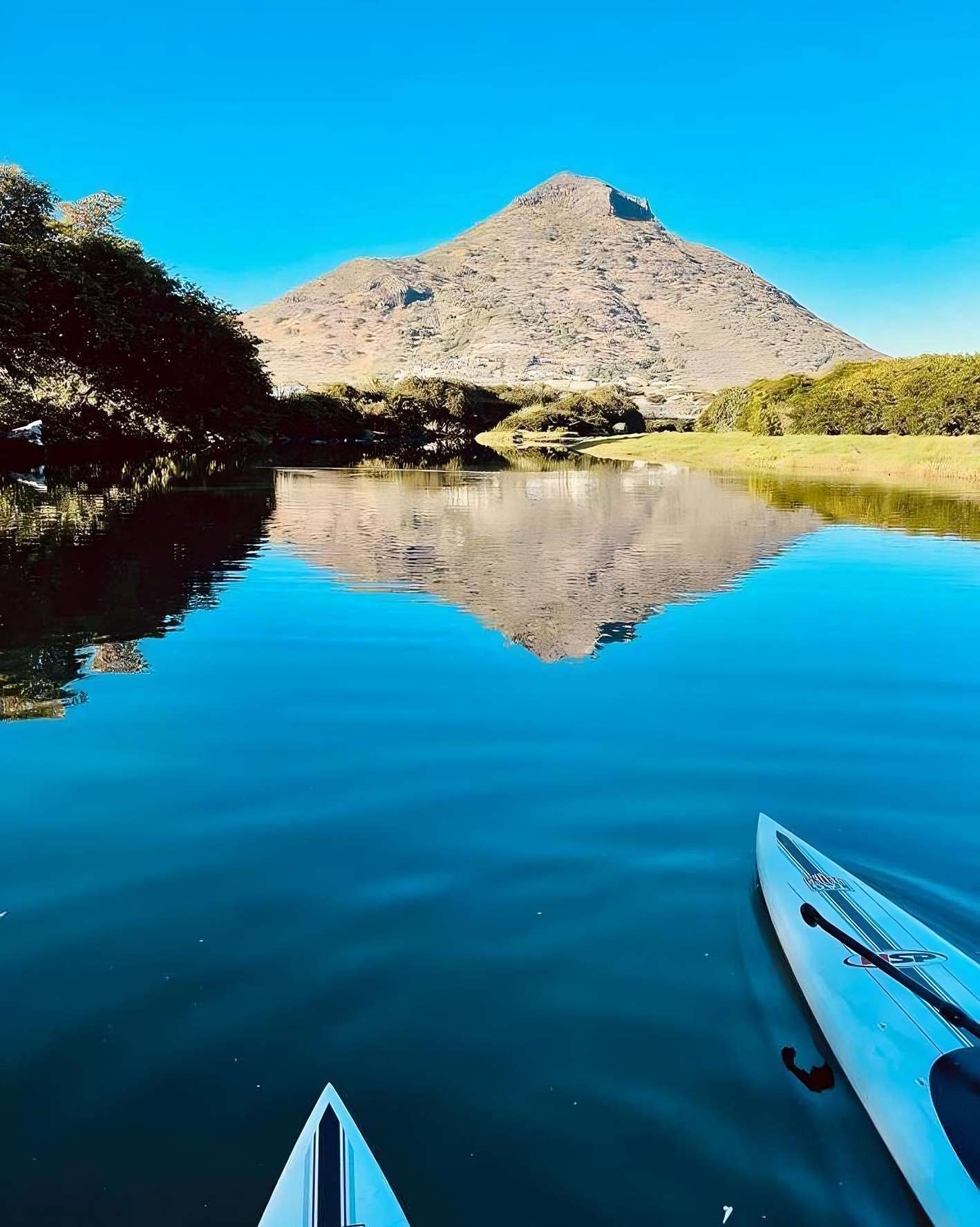
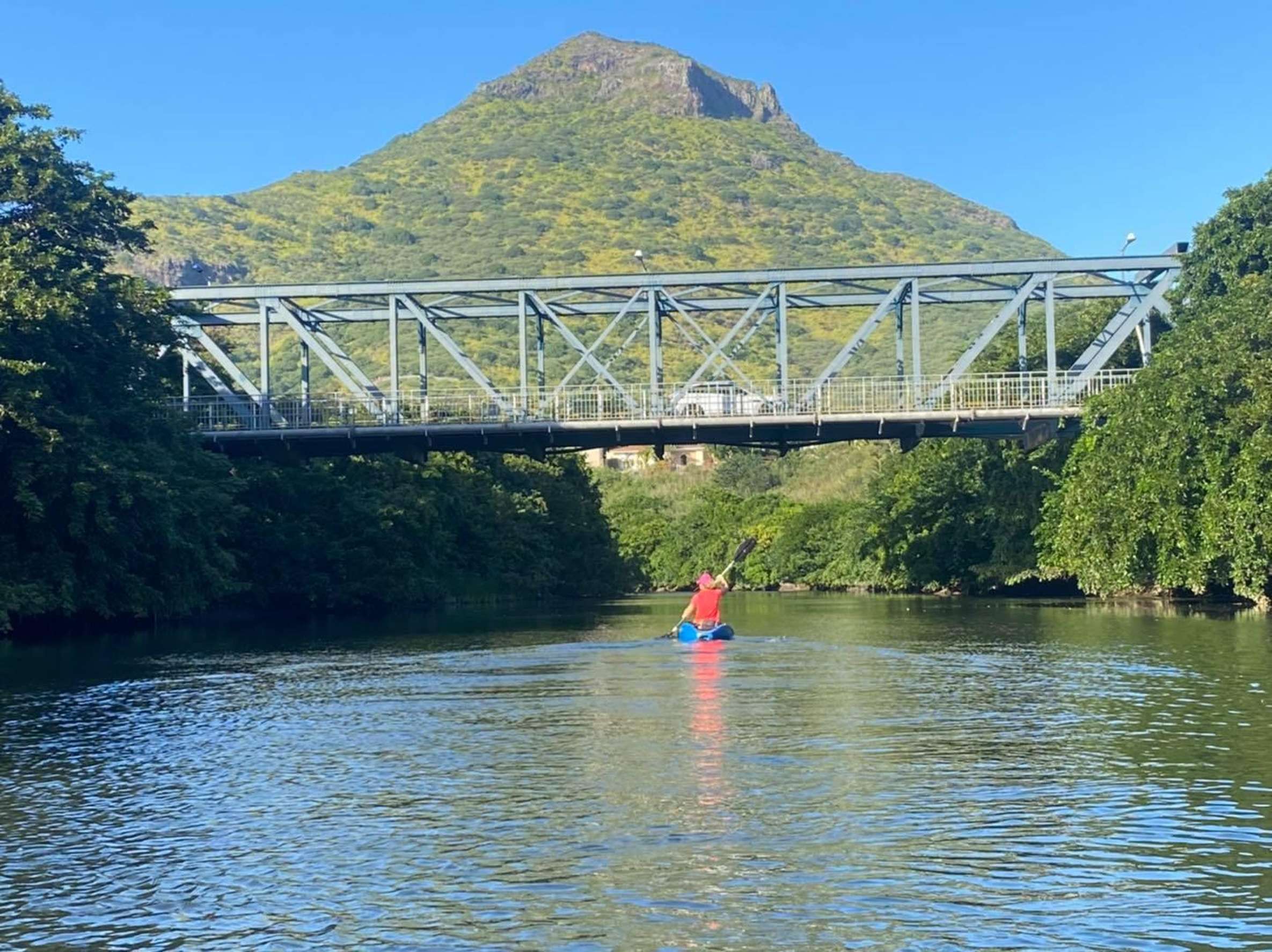
Mauritius: Tamarin Bay Dolphin Watching Kayak Tour
A motor-free paddle at the lowest price of the four, with a certified guide who knows the river-mouth crossing into the bay.
What an ethical dolphin tour looks like in Tamarin Bay
sightings land about 75% of the time
about 2 h
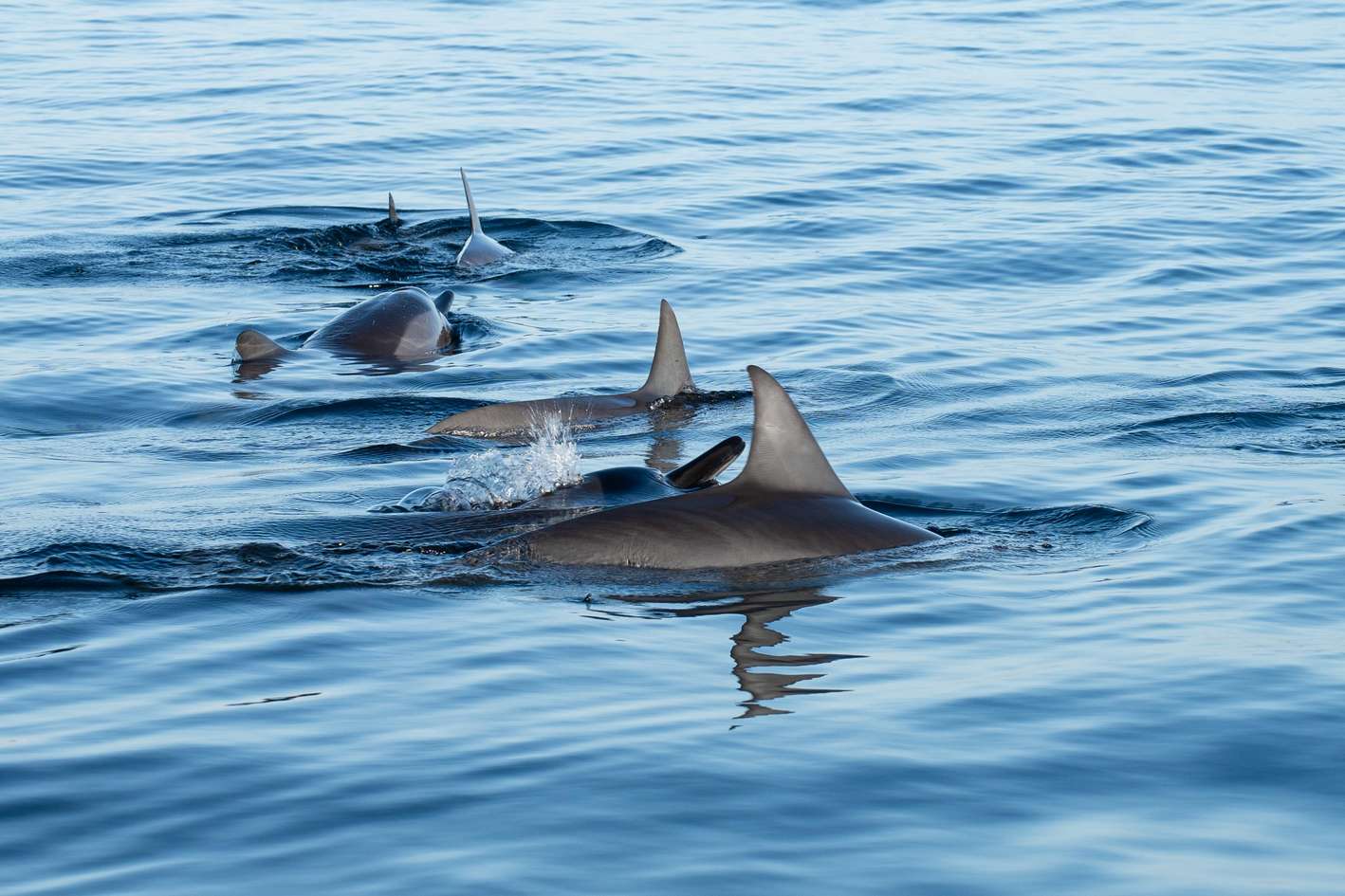
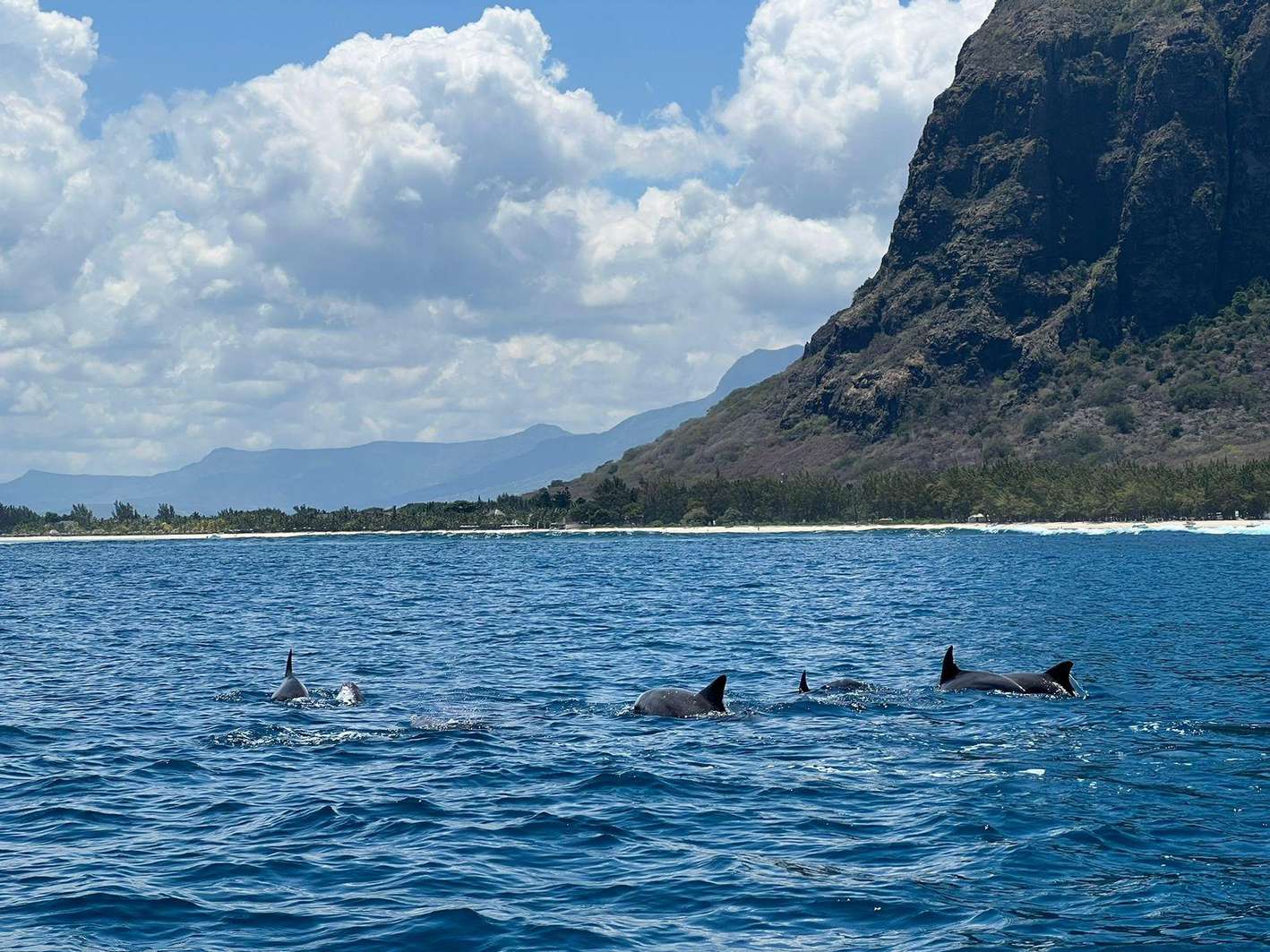
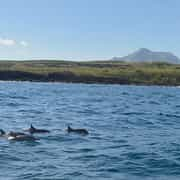
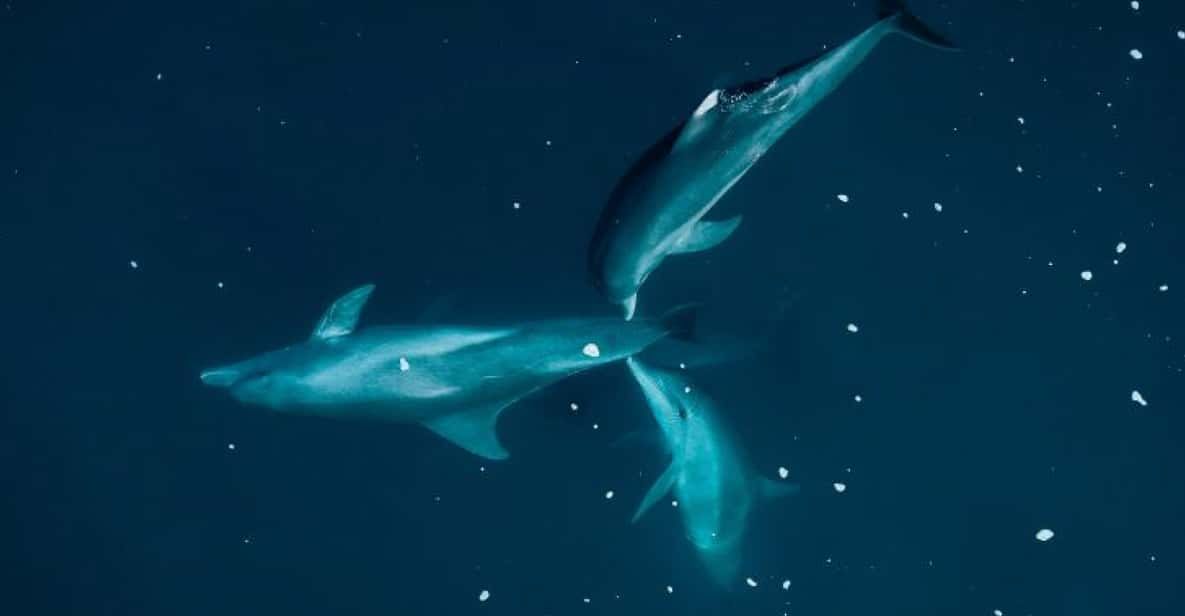
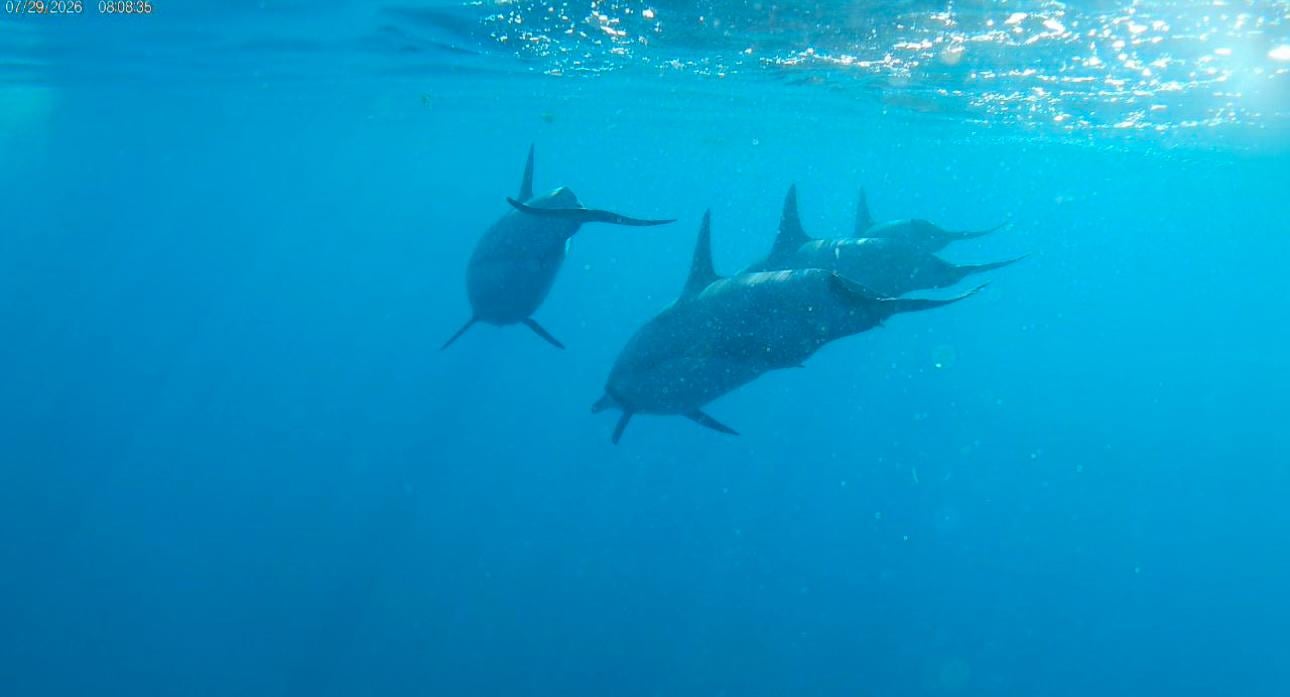
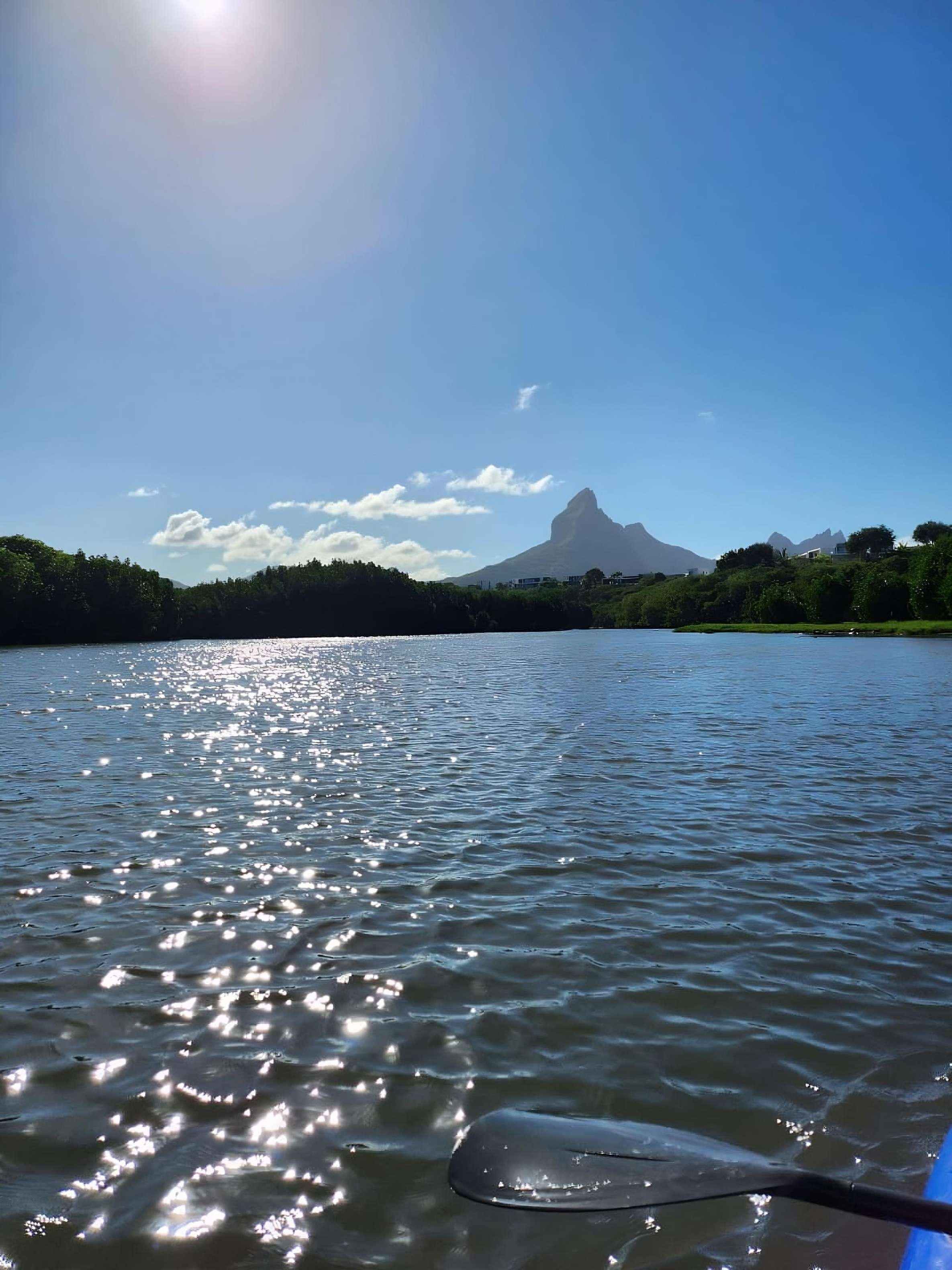
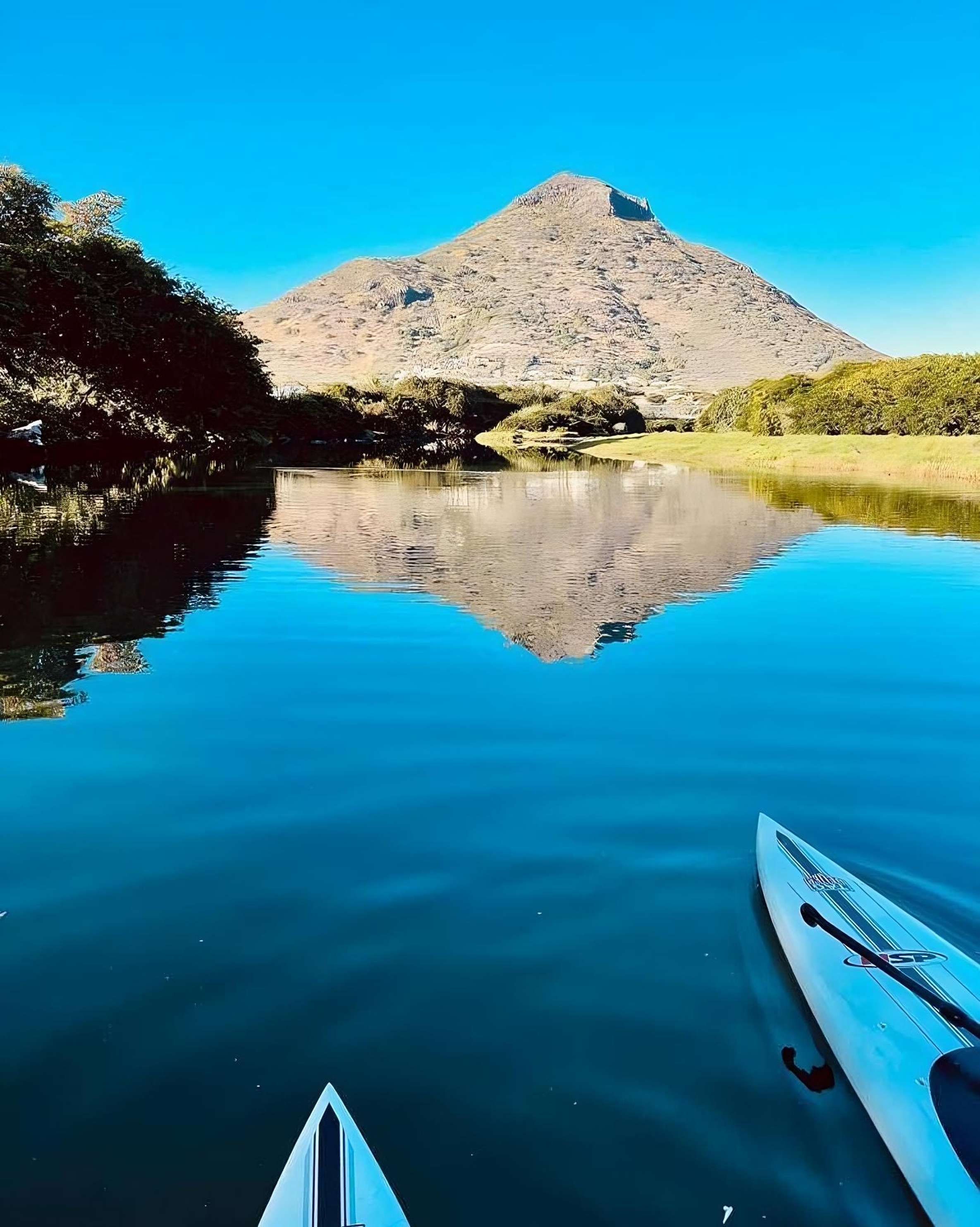
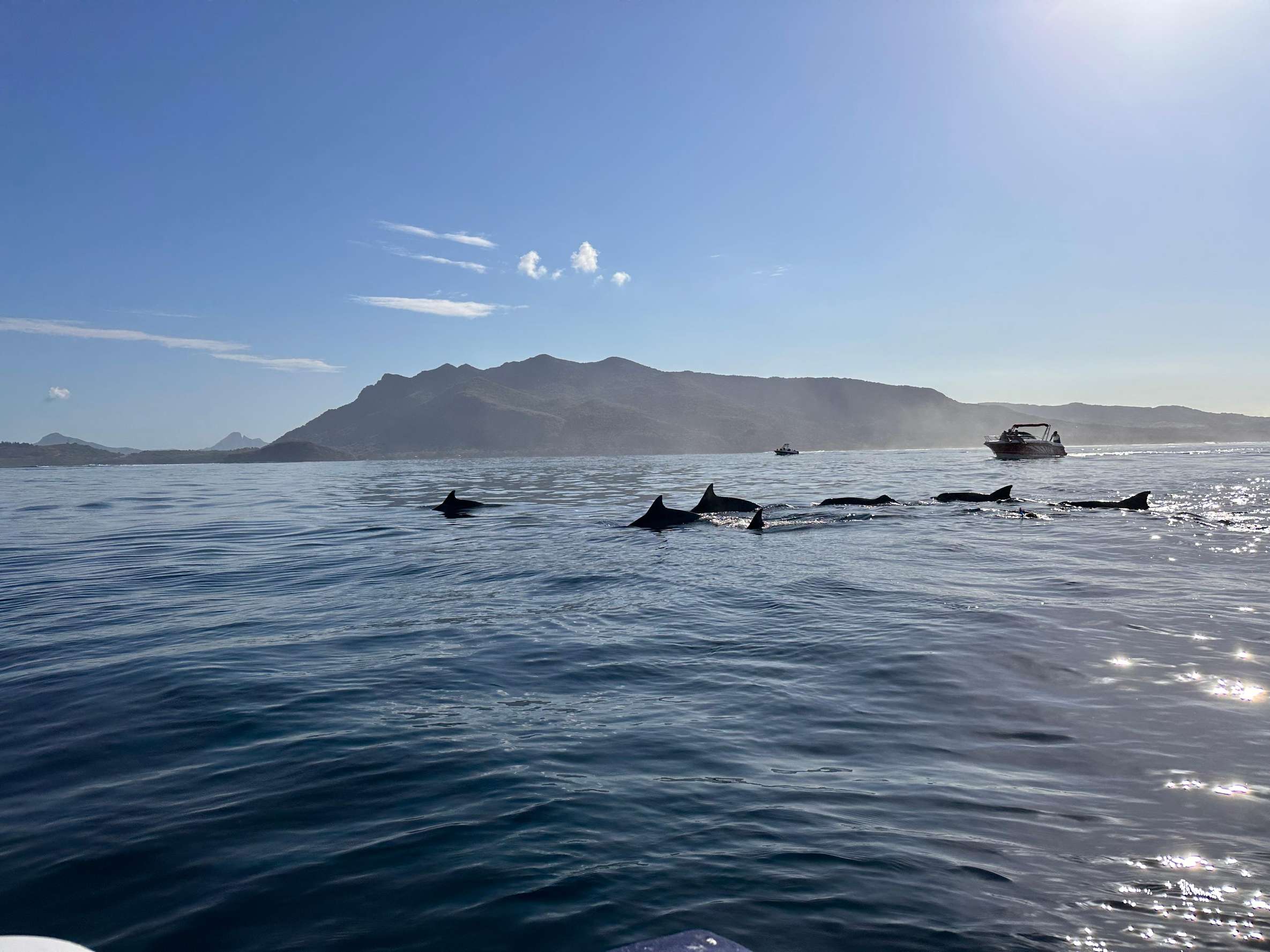
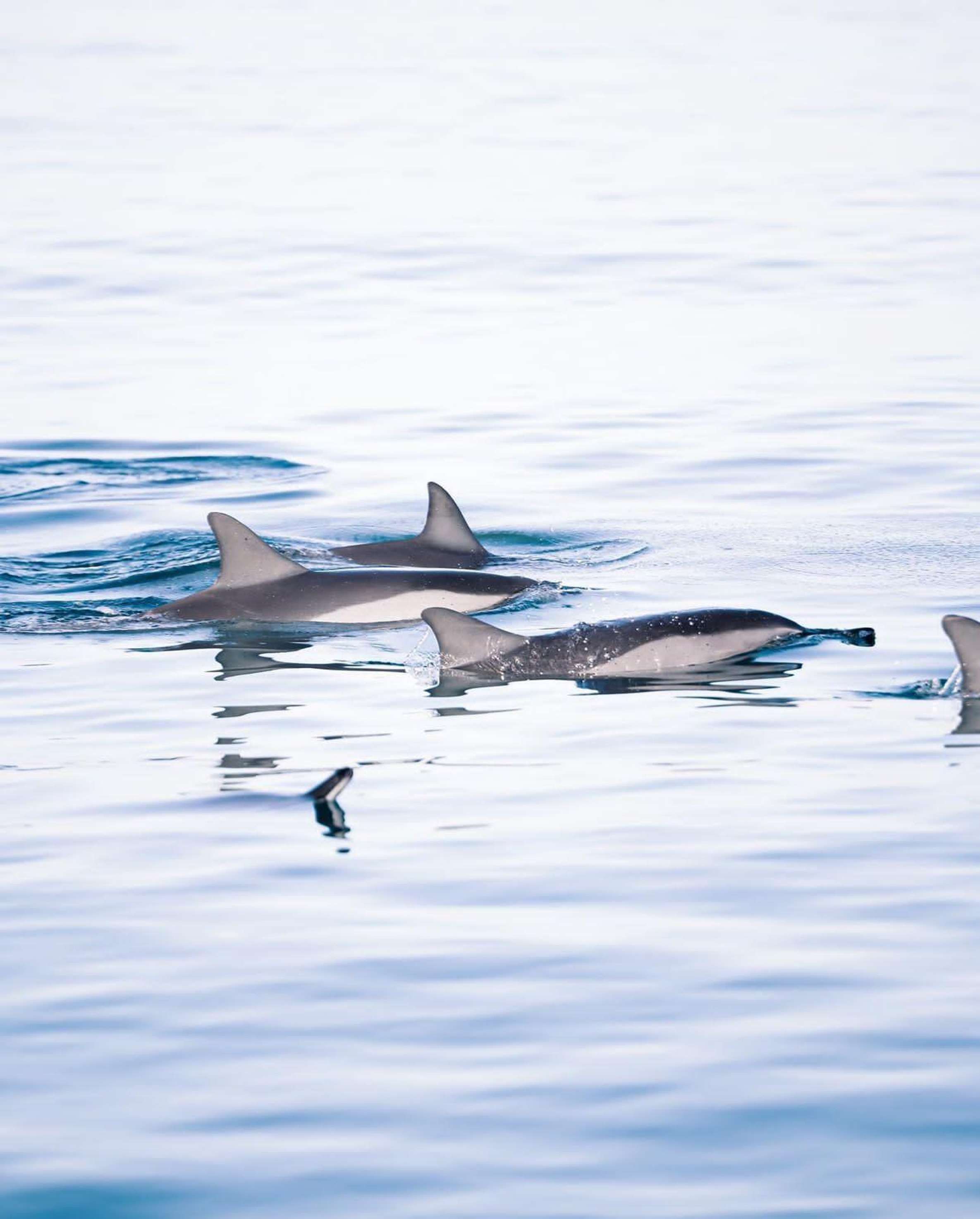
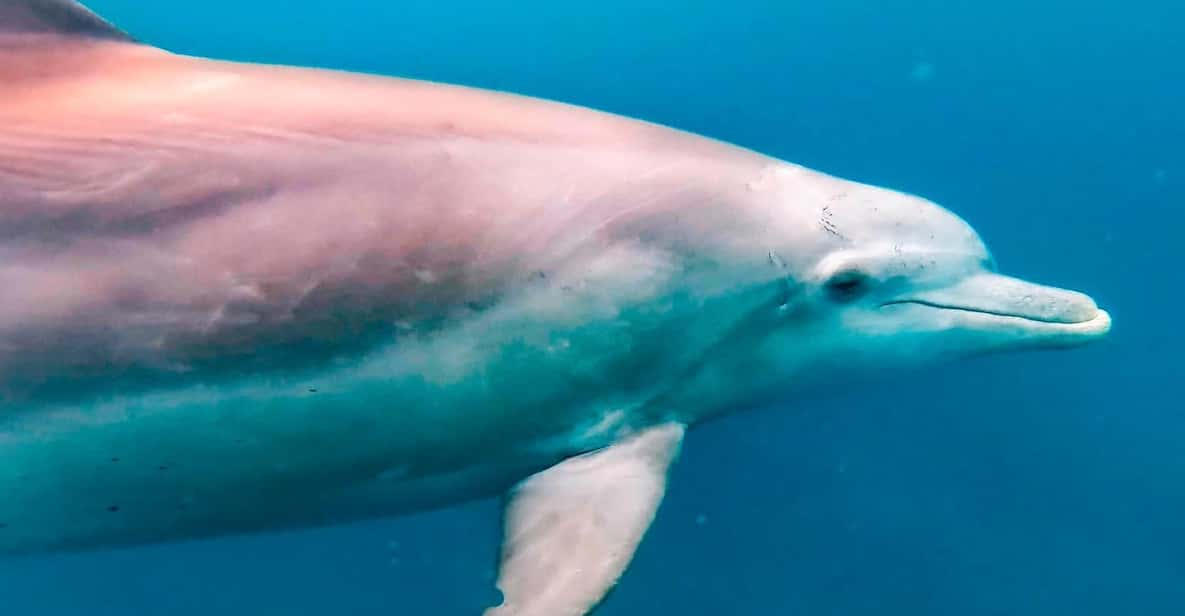
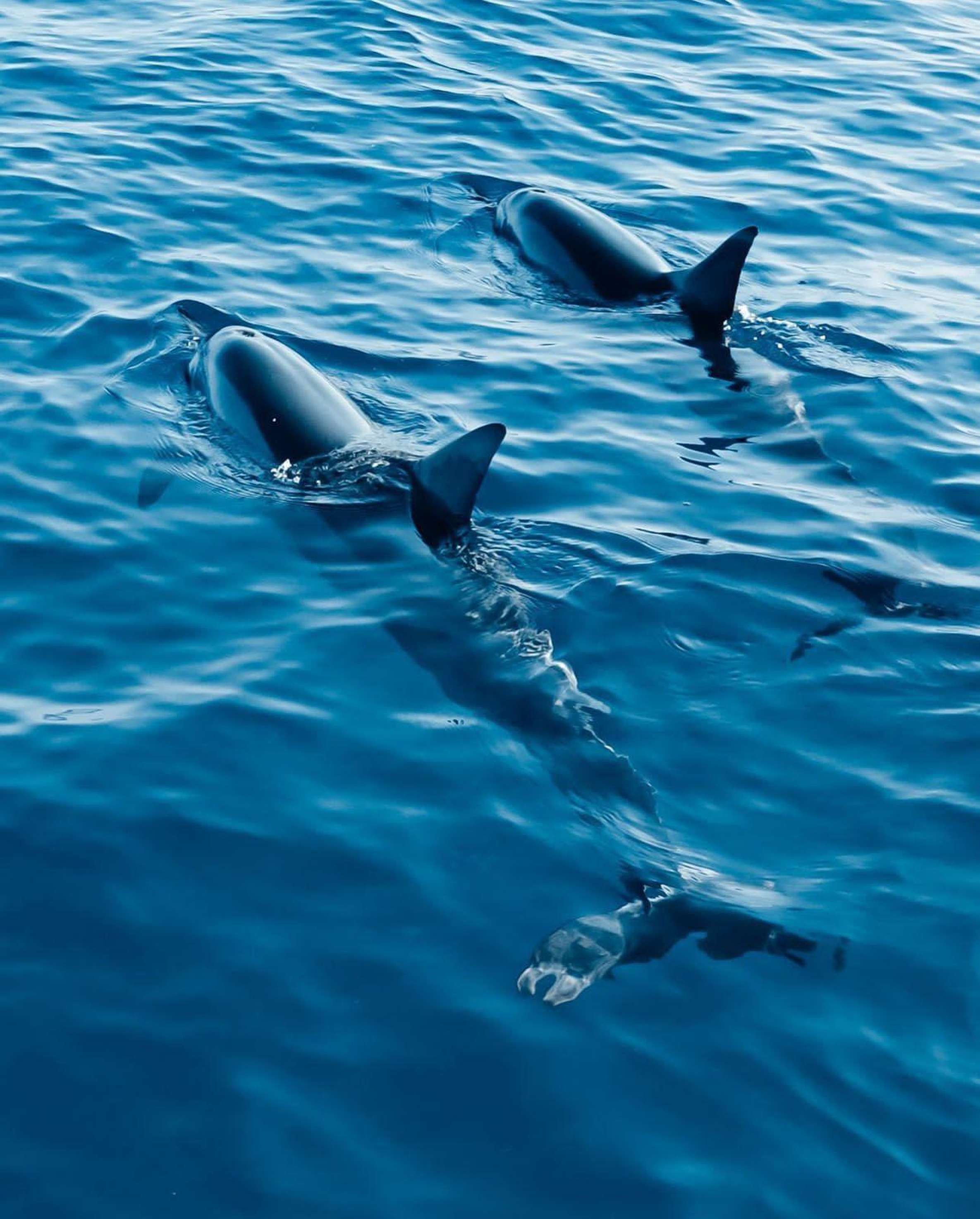
The morning starts with spinner and bottlenose dolphins in Tamarin Bay, where the pods come in at dawn to rest after feeding offshore all night.
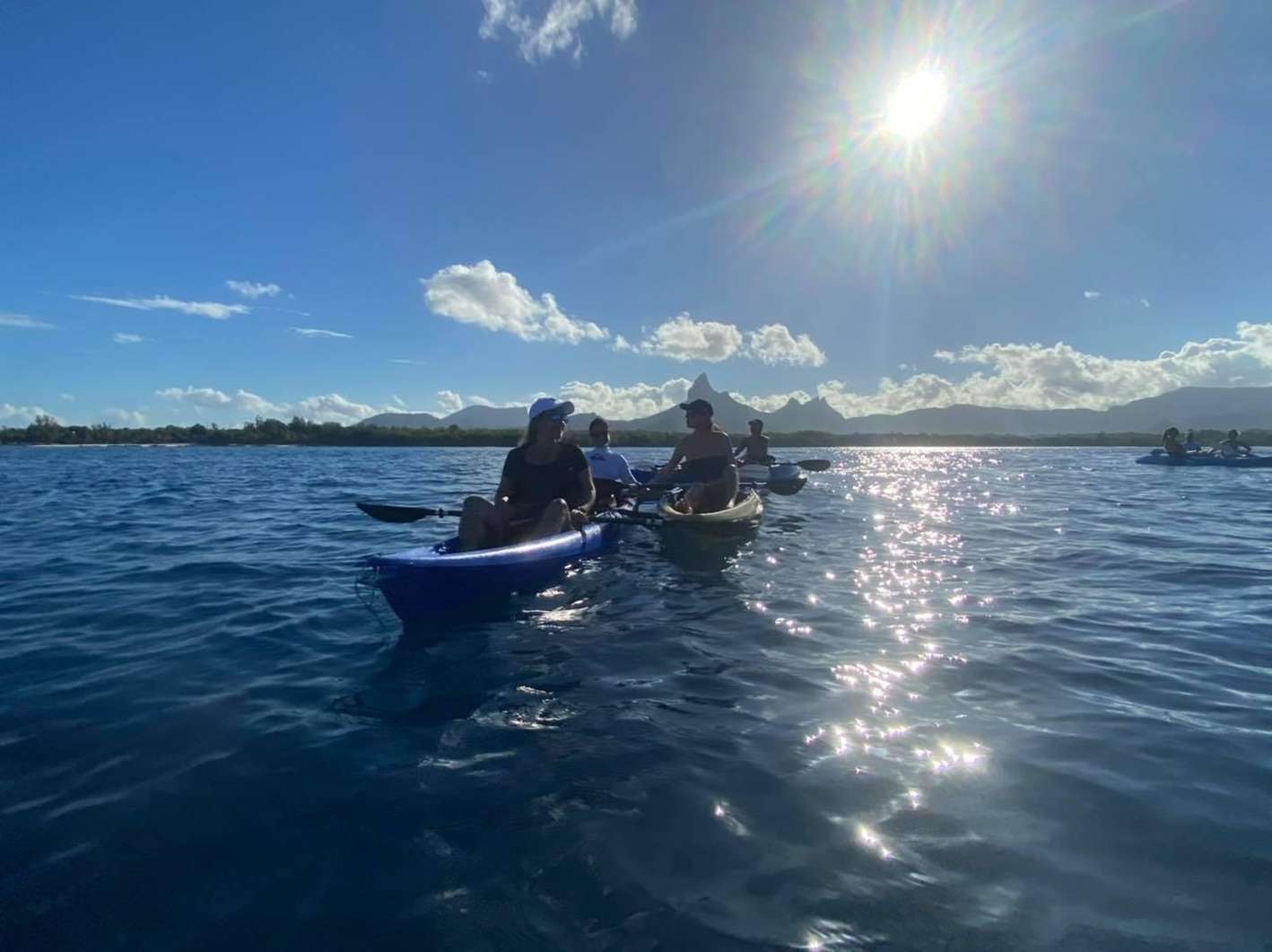
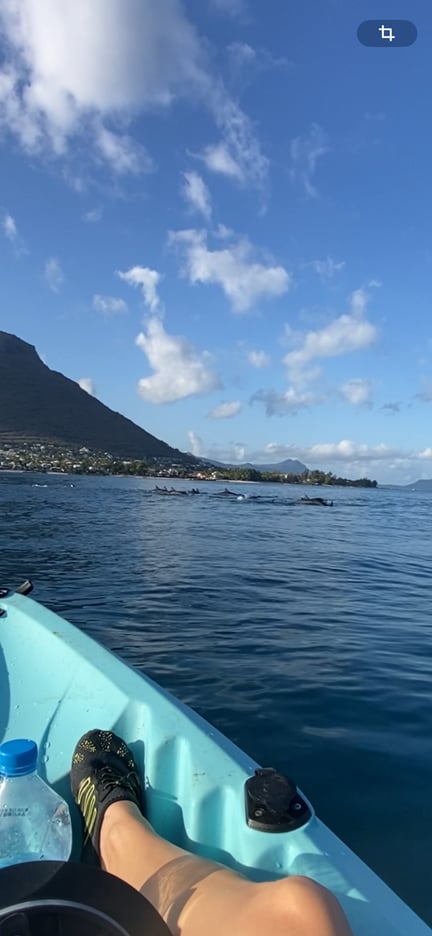
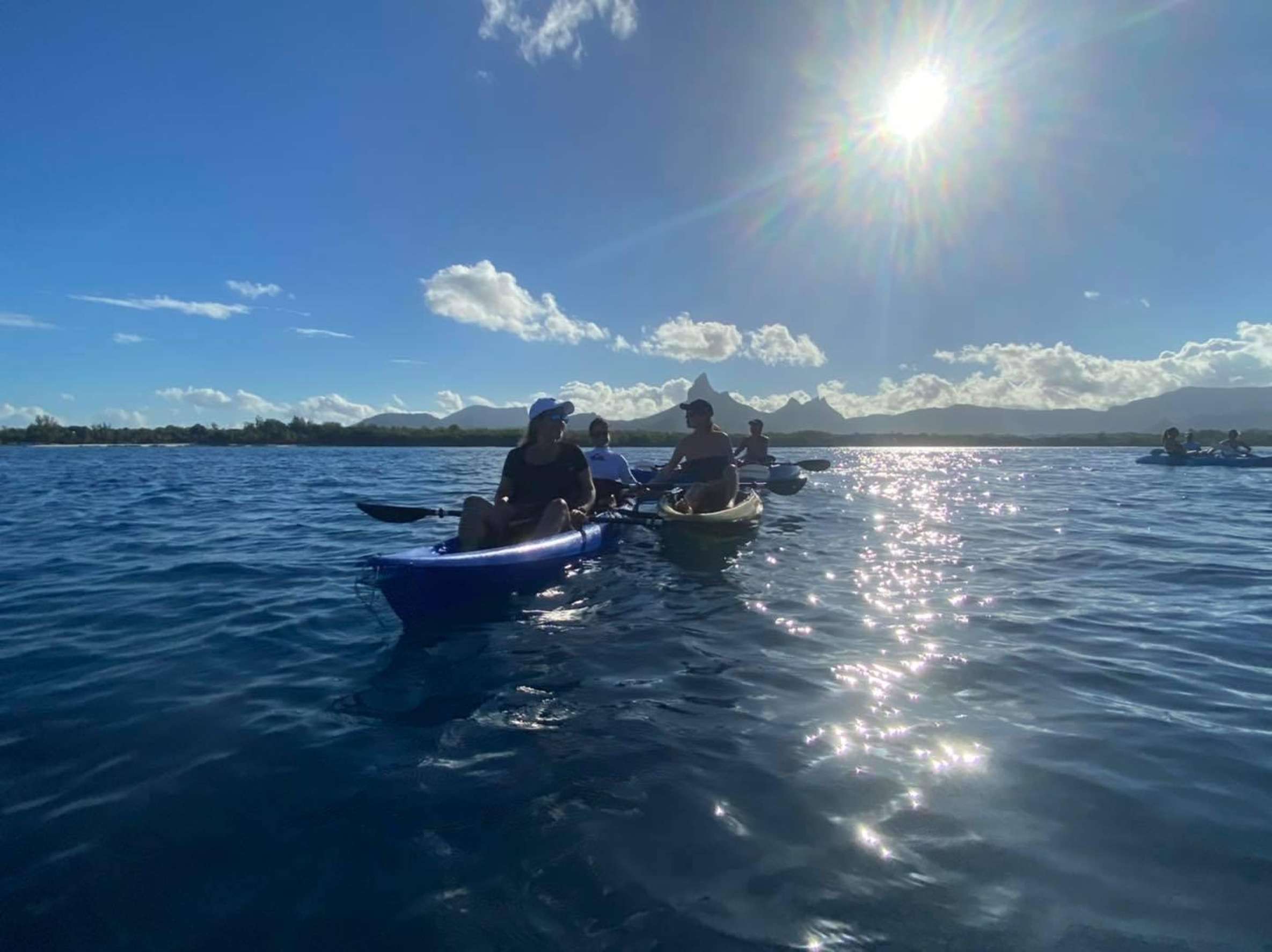
You see them from a kayak, so there is no engine noise between you and the water. The tour runs about two and a half hours, and sightings happen on roughly three out of four outings.
Your guide leads the whole thing: a short briefing on paddling and safety, a quiet approach that follows the rules for watching wild dolphins, and facts about the animals as you go. Breakfast is an optional add-on, and every kayak and life vest is provided.
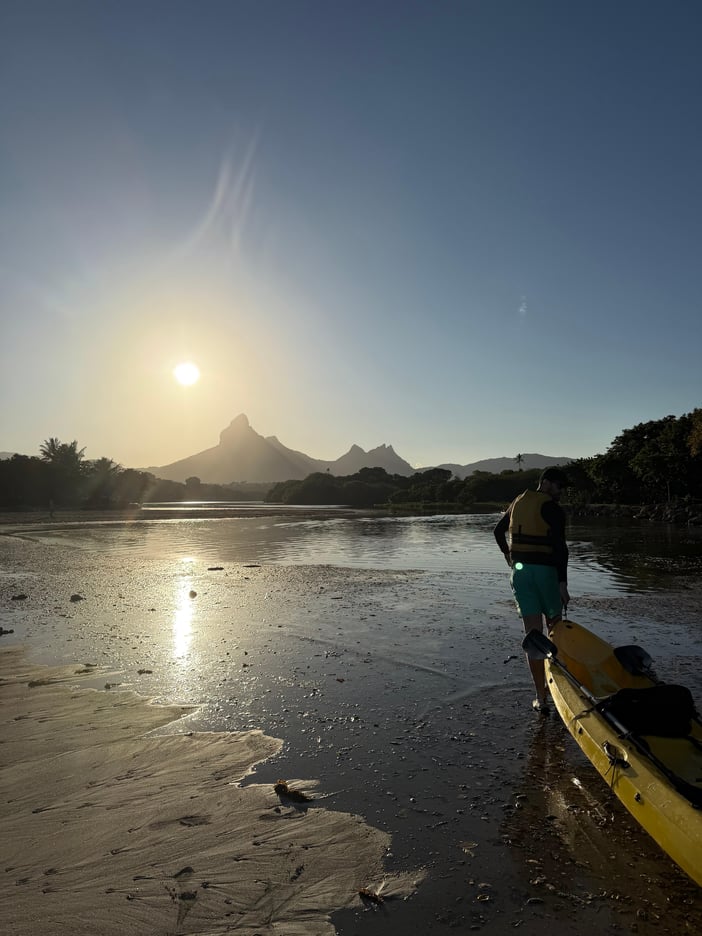
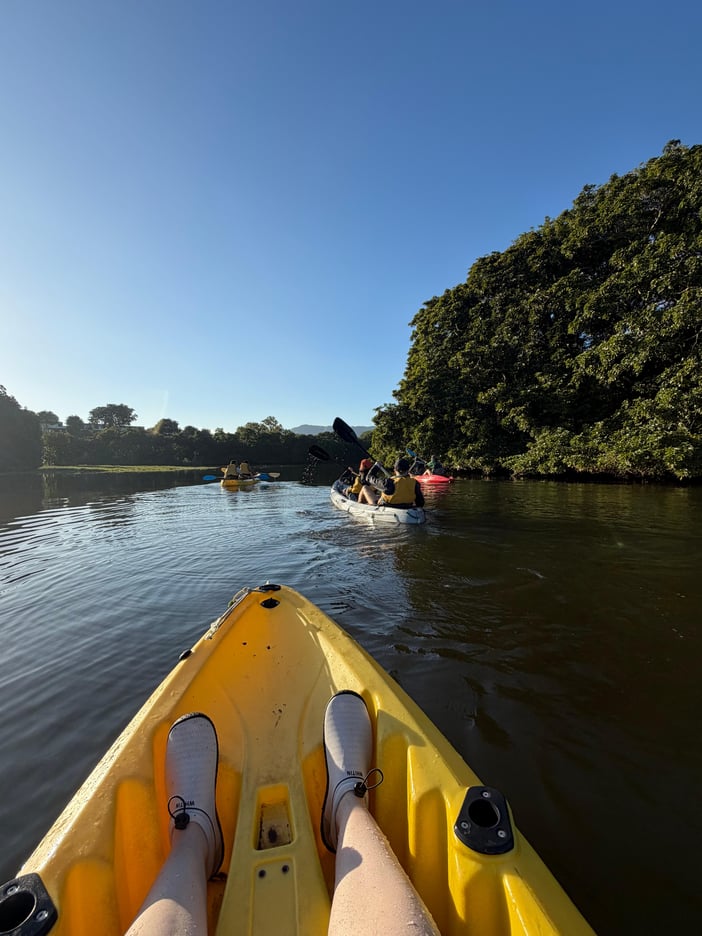
Stop 1Sunrise over Tamarin Beach· about 20 minYou meet your guide on the beach as the sun rises over the west coast, then get a briefing on kayaking and safety essentials. No previous experience is needed.Stop 2Learning the paddle· about 15 minBefore pushing off, your guide covers the paddling technique and how to approach dolphins respectfully if the pod is in the bay. Equipment and a life vest are included.Stop 3Into the calm bay· about 30 minYou paddle out into the sheltered water of Tamarin Bay, the hour when spinner dolphins rest near shore after a night hunting in deep ocean. The sea sets the pace: the outing runs 1.5 to 2.5 hours depending on conditions.Stop 4The quiet encounter· about 45 minIf dolphins are around, you glide toward them in silence and watch them behave naturally, with no motor and no chasing. Your guide keeps the approach within the strict guidelines for wildlife.Stop 5Spinner or bottlenose· about 20 minYour guide explains what you are looking at: spinners often travel in big acrobatic pods, while bottlenose move in small, curious groups. The two species behave very differently.
Included
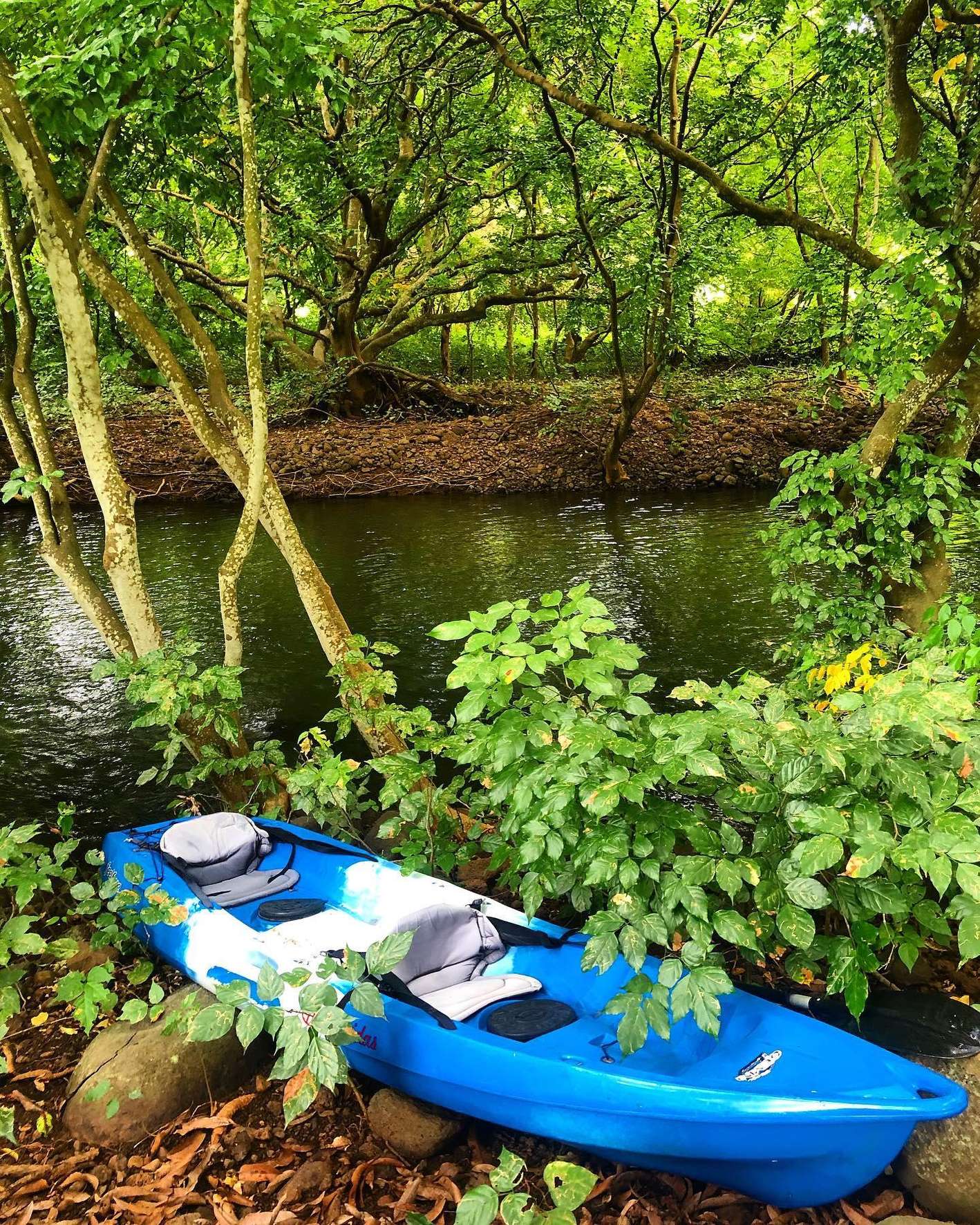
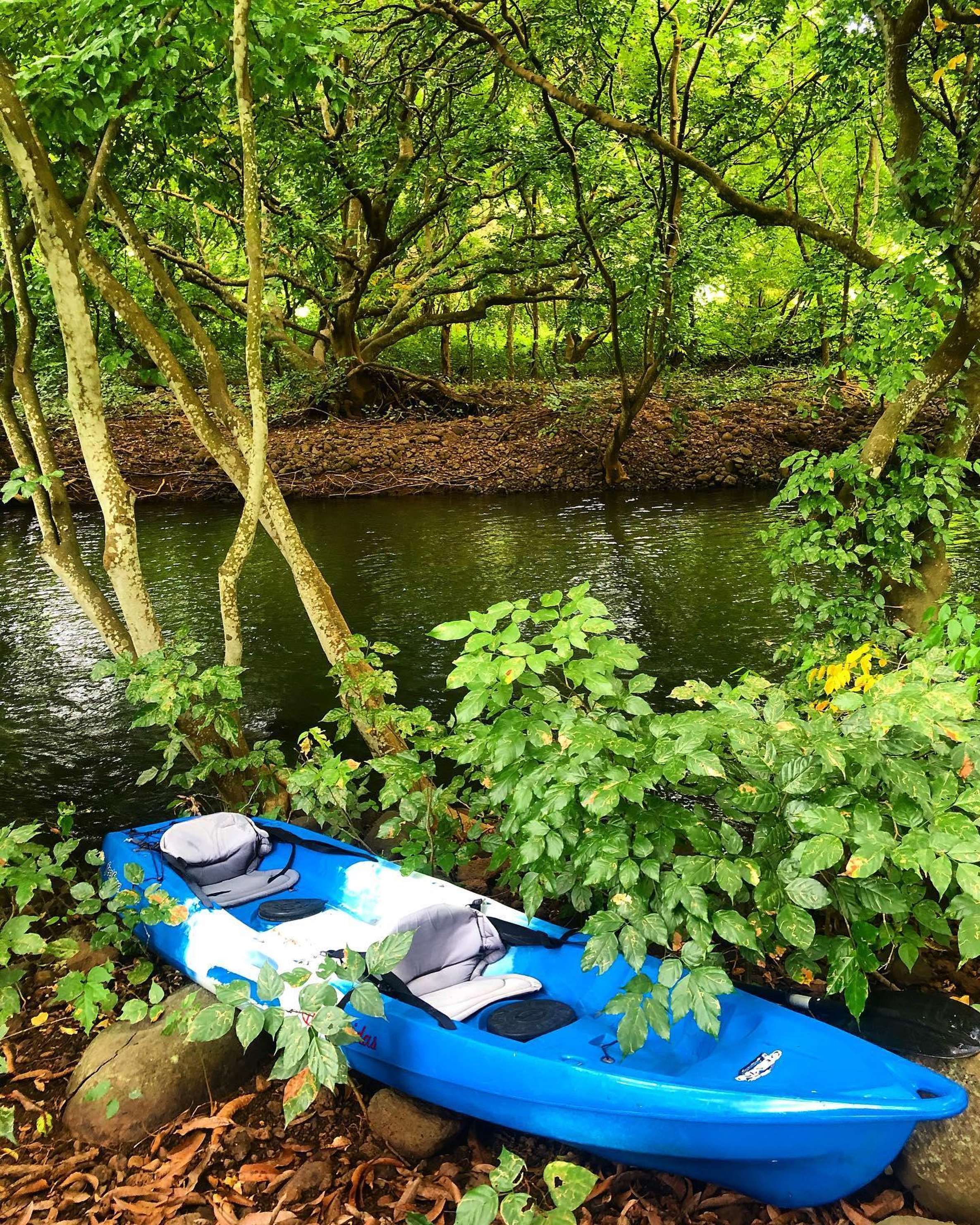
Guided kayak tourEquipment: Kayak and life vest
Not included
Breakfast: Optional breakfast upgrade available during booking.
Which ethical dolphin tour in Mauritius is right for you?
boats must stay 50 m from dolphins by law
Green marks the lowest price. Each price says whether it is per person or per group.
Tour
Price
Duration
Pickup
Languages
Best for
Our pick
Tamarin: Guided Kayak Tour with Dolphins
4.6★ (247)
from $61per person
2.5 hours
no
English, French
travelers who want to watch dolphins without any engine noise at all
Choose a morning with a settled forecast and book as far ahead as you can. The low-impact trips on this page, especially the sea kayak tours, run in small groups and their days fill up quickly in high season.
RecommendedAim for a 6 am or 6:30 am departure; more boats gather at Tamarin Bay after 8:30 am
Pro tipEvery tour here lets you cancel up to 24 hours ahead for a full refund, so book the date you want and move it if the forecast turns
2. Choose the right option
Each tour lists one or two options, and they change what you get. Kayak tours sometimes offer a breakfast add-on, while the private boat tours in Le Morne and Flic en Flac take small groups only, usually four guests plus crew, with the whole boat to you.
Common mistakeBooking the first option on the card without reading what it changes; the upgrade is about the day, not the dolphins
Pro tipA private boat makes water entry easier to time and lets you set the pace, which suits families and hesitant swimmers
3. Check the fine print before paying
Read the suitability rules while you book. The kayak tour requires swimming ability, a minimum age of 12 and a maximum weight of 100 kg per person, and several boat tours list pregnant women as unsuitable.
ImportantIf a rule stops you from joining, such as an age limit or a health condition, confirm it with the tour operator before you pay rather than at the beach
Common mistakeLeaving the booking to the day before; small-group ethical tours need more notice than a party cruise
4. Find your meeting point
Most tours use a meeting point rather than hotel pickup. Kayak tours and shared speedboats start at Tamarin Public Beach, while the Le Morne private boat meets on the public beach in front of the Emba Filao restaurant.
Pro tipYou will get your guide's WhatsApp contact the evening before; save it, since it is your only way to reach them before the tour starts
RecommendedCheck whether your hotel sits far from the west coast, because a 6:30 am start from the north means a very early drive
5. Get ready the night before
Pack swimwear, a towel, sunscreen and a waterproof bag, and put on your swimsuit under your clothes for the early start. You will receive a confirmation with the meeting details, and the guide or skipper will brief you on the rules before anyone enters the water.
RecommendedBring a light windbreaker for the cool, breezy ride out, and wear water shoes at the Tamarin Bay launch
Common mistakeForgetting that kayaking is weather dependent; if tides or sea conditions shift, your guide will reschedule, so keep the next morning free
What to know before you book an ethical dolphin tour in Mauritius
kayak guide contacts you on whatsapp the night before
Can stop the dayGood to knowGood news
01
ChoosingWhat it is, who it suits, when to go
3
Swimming abilityCan stop the day
The Tamarin kayak tours require swimming ability, and some speedboat swims also list non-swimmers as unsuitable. Currents outside the reef can run strong on a falling tide, so open-water confidence matters more than it does in a sheltered lagoon.
Booking
Small-group and low-capacity outings fill up fast in peak season, so book as early as you can. One good habit: plan a dolphin morning for early in your holiday, leaving room to move it if conditions do not cooperate.
Timing
Aim for a 6:00 or 6:30 am departure, when the dolphins rest near shore and few boats are around; many boats gather after 8:30 am. Later trips can face crowded water and pushy approaches around the pods.
02
BookingHow far ahead, and what happens if plans change
1
Cancellation
The tours allow free cancellation up to 24 hours before departure for a full refund. That takes the pressure off booking early, since you can re-plan if the weather turns.
03
Before you goPapers, health, what to bring
4
Health limitsCan stop the day
Pregnant women are listed as unsuitable on several tours, and the Flic en Flac boat does not take babies under 1 year. People prone to seasickness should note that some boats list them as unsuitable too.
Age and weight
The guided Tamarin kayak tour takes children from 12 years old and caps weight at 100 kg per person, with previous paddling experience recommended. Babies and children in carriers are not allowed on the water.
On the day
Kayak outings may run shorter or longer than planned depending on tides and weather, and the Flic en Flac boat usually departs at 6:30 am but stays flexible. If no dolphins show on the kayak route, the guide takes an alternative paddle up the Tamarin River instead.
What to bring
Pack light but right for an early, splashy morning:
Swimwear worn under your clothes, plus a towel
Sun hat, sunscreen and sunglasses
Water and a snack, since breakfast may not be included
A waterproof bag for your phone and dry clothes
04
On the dayWhere to be, when, and how you get there
2
Meeting points
Boat and kayak tours meet at fixed points: Tamarin Public Beach, La Preneuse, Flic en Flac Public Beach, and Le Morne Public Beach in front of the Emba Filao restaurant. Arrive early enough to find parking and your guide before launch.
Pickup
Hotel pickup is available on some outings, including the Flic en Flac sunrise boat for guests staying at certain hotels. The Le Morne tour leaves it out, so check where you need to be and how you will get there.
05
During the tourWhat is expected of you
2
Briefing
Before anyone enters the water, the operator must brief swimmers on calm, silent swimming and hand out written rules for operating near dolphins. Listen for how your skipper explains the approach; a good briefing is a sign of a responsible crew.
Touching rules
Mauritian law prohibits touching or feeding dolphins, making noise to attract them, and approaching from behind or head-on. Several tours repeat these rules on board, so keep your hands to yourself and let the animals decide how close they come.
An ethical dolphin encounter in Mauritius, from doubt to booking
a life-saver and oxygen kit ride along
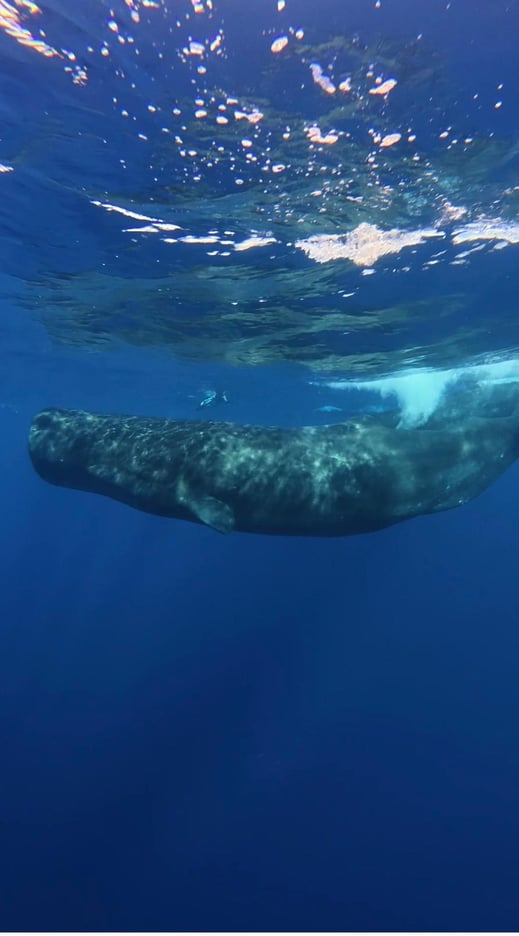
Swimming with wild dolphins is legal in Mauritius, and it can be done without crowding the animals. The operator, the hour and the boat decide everything; here is how to get all three right.
Tamarin· 20.32° S, 57.37° E
If you only remember three things
1
Book the earliest launch you can, ideally around 6 am, before the boats gather.
2
Any boat must stay 50 metres from the dolphins, and no more than three swimmers may be in the water at once.
3
Never touch, feed or chase a dolphin, and never free-dive above one.
Is it legal and ethical to swim with dolphins in Mauritius?
The doubt is fair, so start with the law. Swimming with wild dolphins is legal in Mauritius as a licensed activity. Paid operators need a licence for dolphin and whale watching together with swimming, a certified skipper, an approved propeller guard, a life-saver, first-aid and oxygen kits on board, and liability insurance.
Before you enter the water you sign a disclaimer and get a briefing on calm, silent swimming. Swimming with whales is prohibited, so any tour promising that is telling you something.
The rules also shape the encounter itself. Boats may not enter within 50 metres of a dolphin, and between 50 and 150 metres they run at no-wake speed.
They approach from the side, travel parallel, and never drive through a pod. No more than three swimmers may be in the water at once, including the life-saver.
What can make it unethical is the crowding. Conservation groups have reported boats chasing pods and disturbing their rest, and boats have been seen changing the animals' behaviour. The encounter you want exists in a welfare-first form. You just have to pick the operator that runs it.
The checks fit on one hand. A licensed operator, a certified skipper, no chasing, distance kept, a briefing before entry and small groups in the water. Here is how the tours on this page measure up.
How to choose an ethical dolphin tour in Mauritius
Check
Why it matters
Our pick
Licensed operator and certified skipper
Paid dolphin watching requires a Tourism Authority licence and a skipper with a marine-mammal certificate
The kayak trip needs no motorboat licence at all, and the boat tours list licensed local skippers
No chasing or encirclement
Crowding resting pods is what turns a legal swim into harassment
The guided kayak paddles silently and approaches only within strict guidelines
Approach-distance compliance
The law sets a 50-metre buffer and a no-wake zone from 50 to 150 metres
The Flic en Flac private sunrise boat keeps a respectful 50-metre distance by its own policy
Briefing before entry
Swimmers must know calm, silent technique before the water
Guides and captains brief you before every entry
Small swim groups
Three people, including the life-saver, is the legal maximum in the water
The kayak takes small groups and the private boat carries at most 4 passengers
Every row above comes straight from the regulations or from what the tours themselves commit to, so you can hold an operator to each one before you pay.
Tour for this
Ocean Symphony: The Dolphin & Whale Encounter Experience3.9★ (114) · 7.5 hours · Hotel pickup · Free cancellation
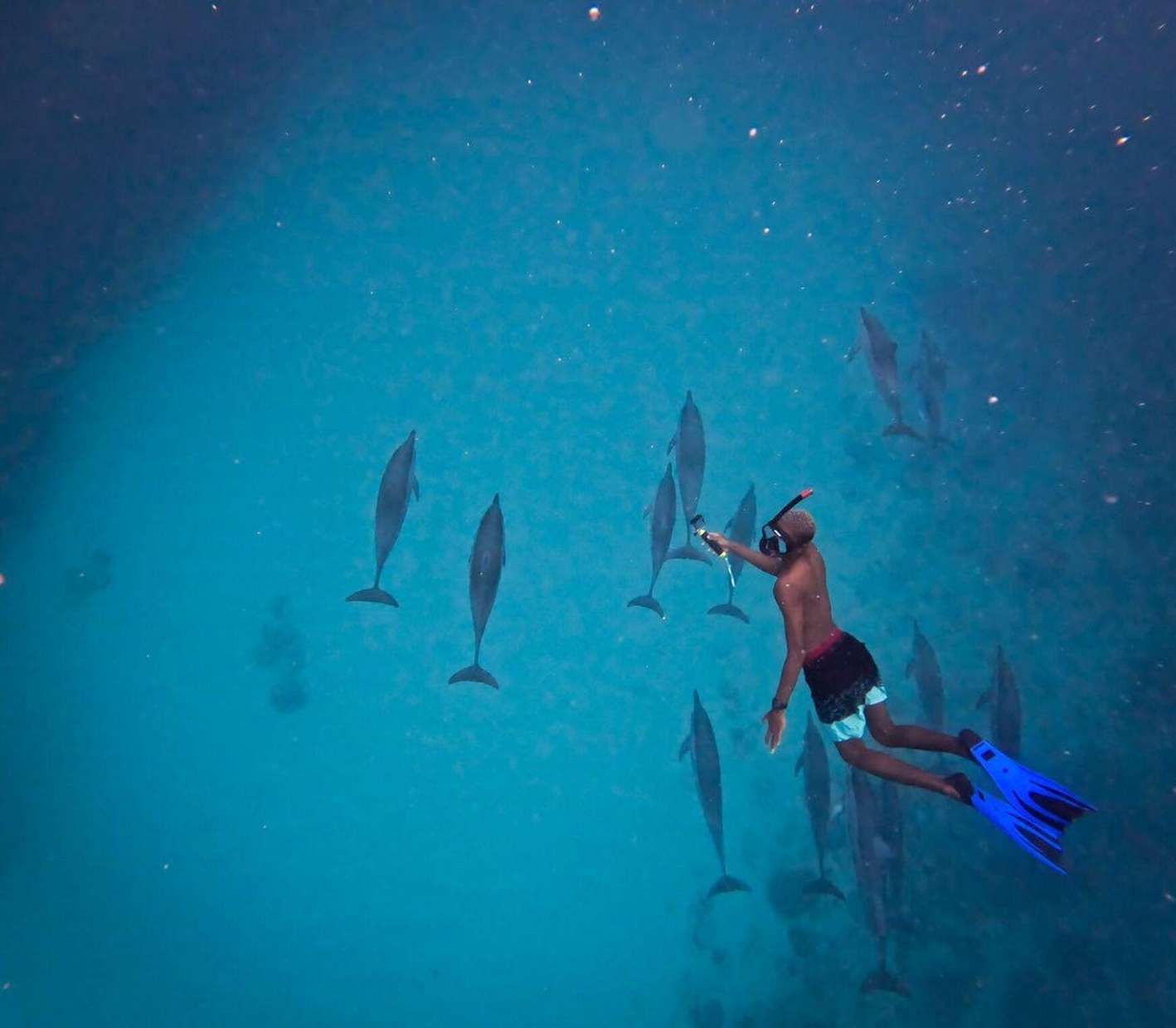
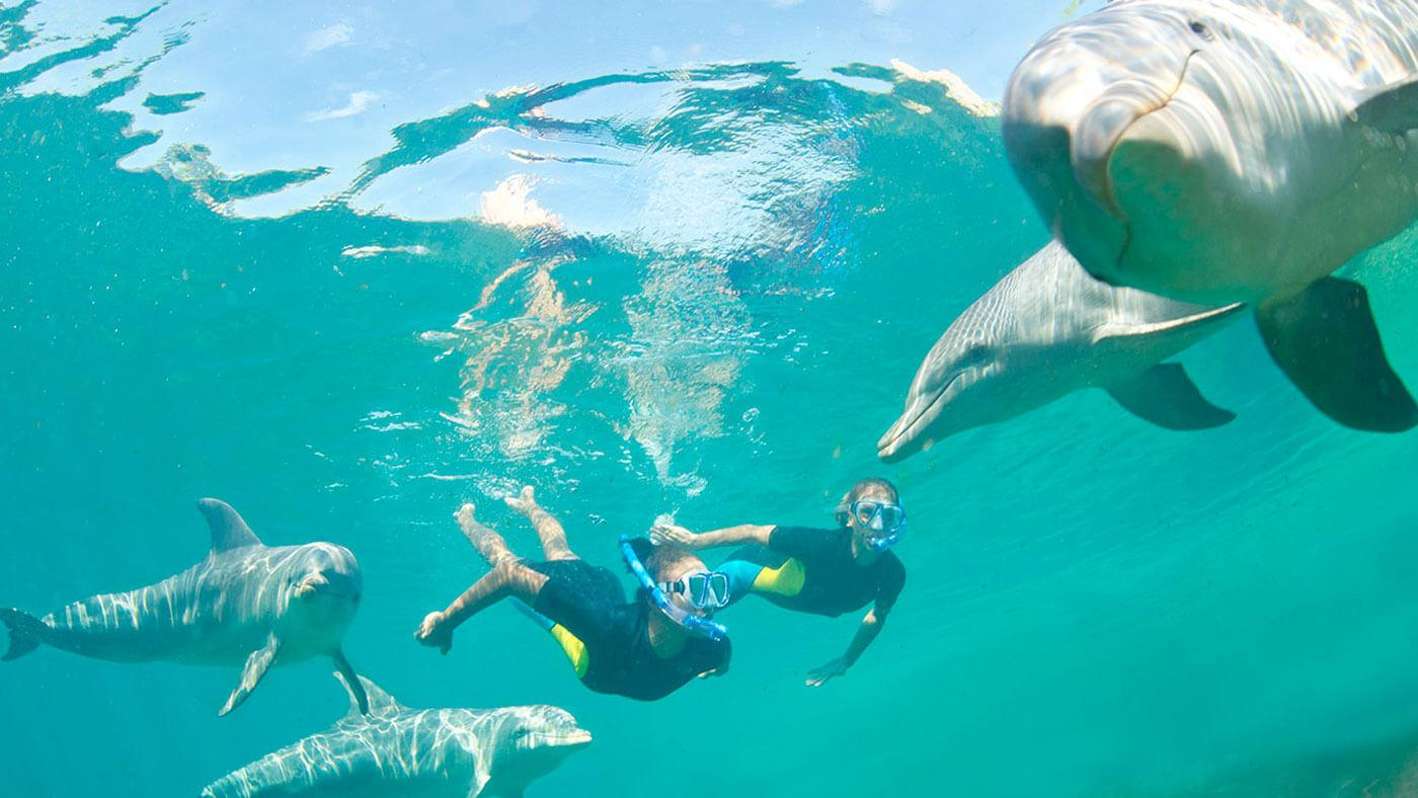
Tamarin Bay, first light. Forget the petting-pool image entirely. What travelers describe is short and unscripted: the skipper positions the boat ahead of a pod's path, you slip in quietly with your snorkel gear, and the dolphins simply pass.
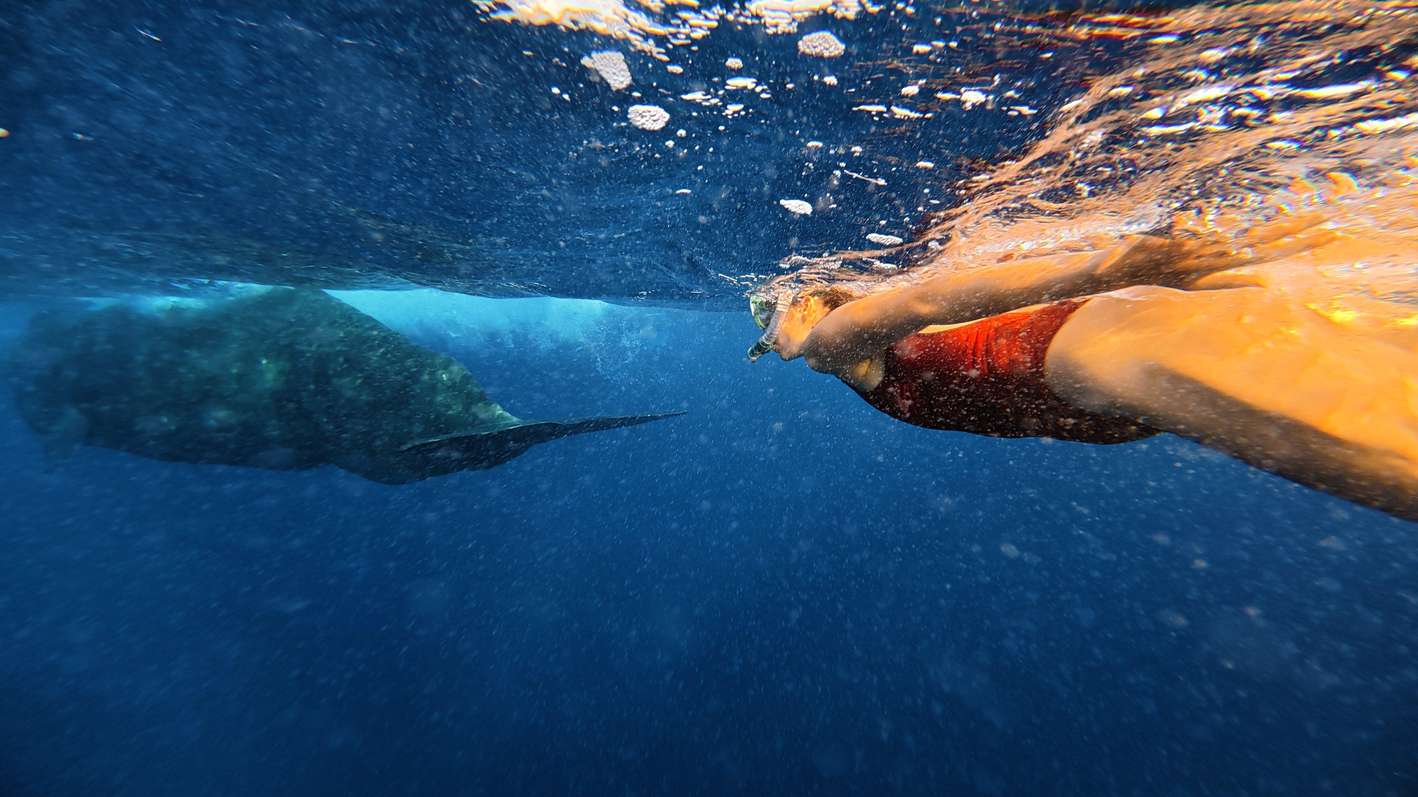
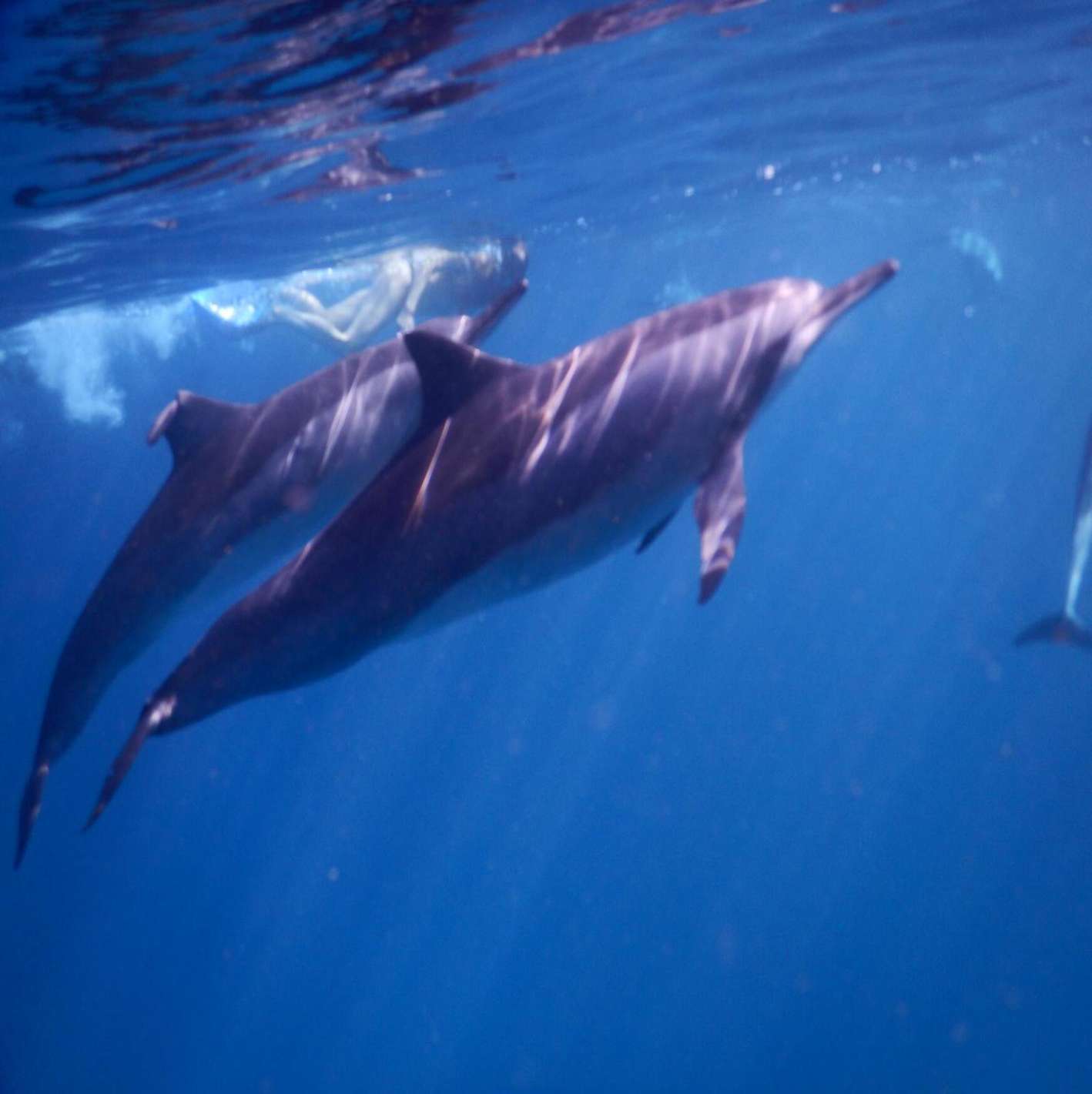
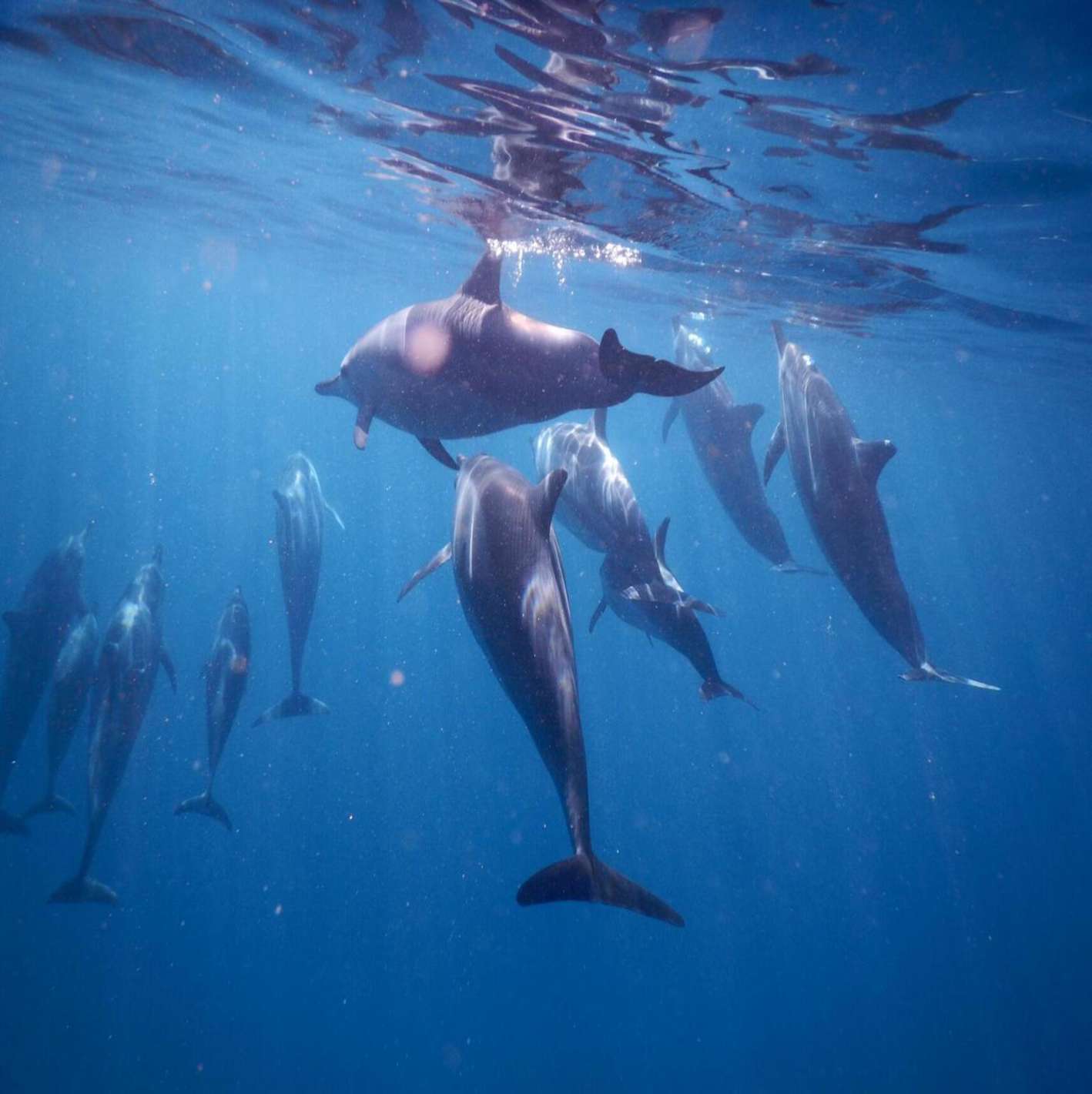
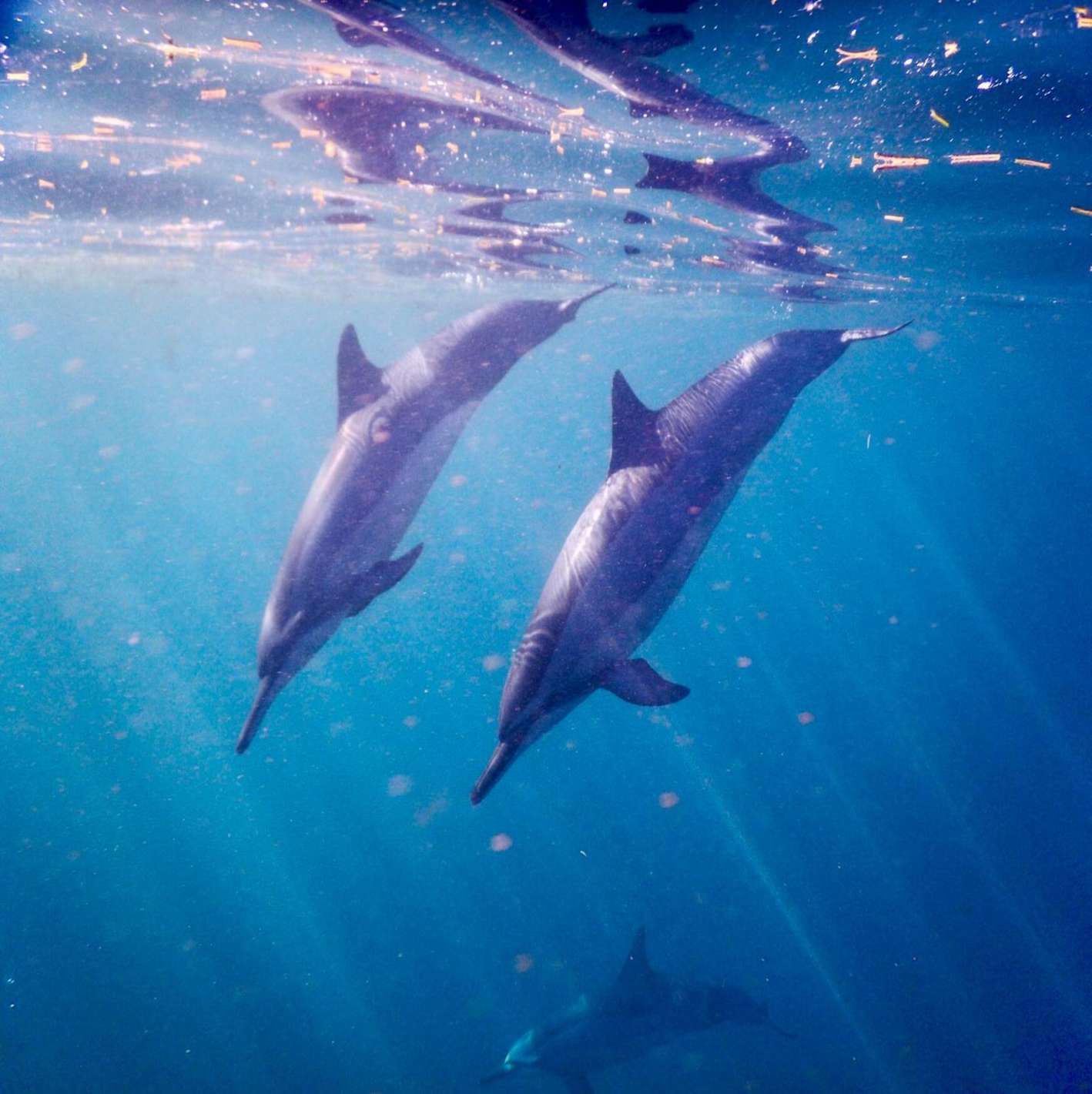
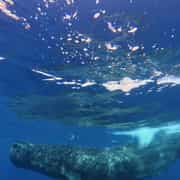
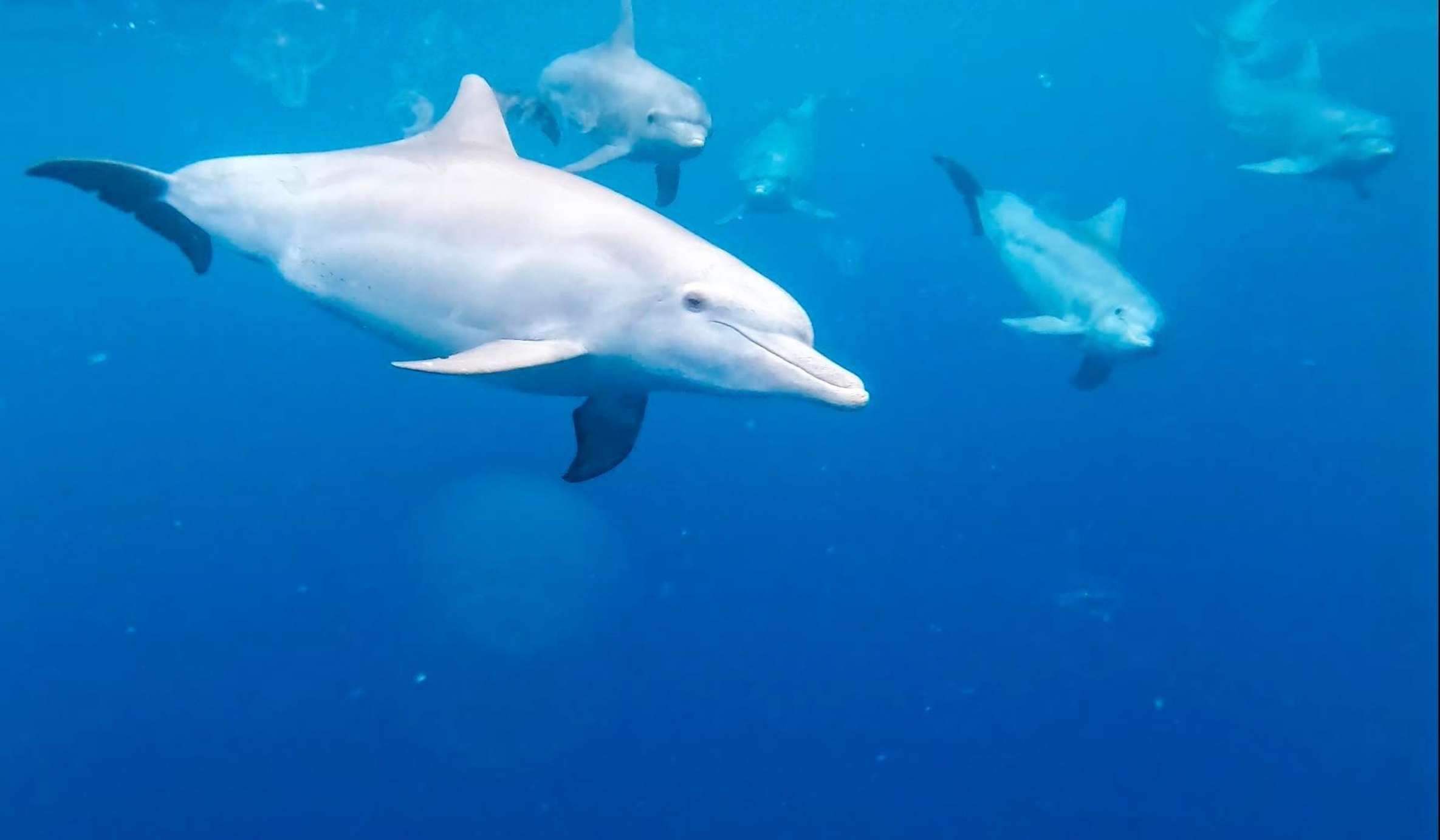
In one account that gets told often, swimmers entered one at a time, without splashing. Underwater they heard the pod clicking and whistling before they saw anything, then watched the animals glide past several metres down, a few metres away. The dolphins stayed that far off. They are wild animals, free to move on.
A swimmer who was there put it in a sentence worth keeping.
A traveler's note
Amazing activity and guides! We saw and swam with dolphins and turtles without crowds of tourists. Snorkeling spot had squid, starfish, sea urchins and more.
That distance is the point. A pod may come toward you or ignore you completely, and both count as a good encounter. Hold onto the boat's line if that is the method, stay calm at the surface, and let the animals decide.
The water here is open sea beyond the reef, so a competent swim helps. What stays with people is the sound, heard on the dolphins' own terms.
Tour for this
Black River: Dolphin Swim and Whale Watching by Speedboat4.6★ (760) · 5 hours · Free cancellation
When to book an ethical dolphin trip for calm seas
Season decides half the day. Mauritius's summer, November to April, is warmer and wetter, and the sea is calm far more often in summer: on most days from November to March the water sits flat, while May to September gives you calm seas on only about half the days, with August the roughest month.
Winter, May to October, brings drier days, over three weeks without rain in an average month. Recorded spinner-dolphin sightings lean slightly toward winter, and almost all of that difference comes from a single month: October.
The two threads meet in one window, and the chart makes it easy to see where.
Mauritius dolphin-trip seasons
September: 5 out of 5 for how busy it gets. Tours are at their busiest, with 23.4 dry days and calm seas on 63% of days; dolphin records remain modest.
HighestMay to Jun, Sep to Nov
In betweenApr, Jul to Aug
LowestDec to Mar
Darker: a higher how busy it gets score, out of 5
Tap a month to read it.
October: oceanic dolphins seen 17 times. Tours are busy, with 21.8 dry days and calm seas on 70% of days; local dolphin records peak in both datasets.
HighestOct17 times seen
In betweenMar to Apr, Nov8 to 10 times seen
LowestMay to Sep, Dec to Feb1 to 6 times seen
Darker months: higher, from 1 to 17 times seen
Tap a month to read it.
July: 23.6 dry days. Tour activity is near average, with 23.6 dry days and calm seas on 65% of days.
HighestMay to Oct20 to 23.6 days
In betweenNov15.8 days
LowestDec to Apr7.4 to 12.4 days
Darker months: higher, from 7.4 to 23.6 days
Tap a month to read it.
December: calm sea on 87% of days. Tours are quiet, with 12.4 dry days and the calmest sea of the year at 87% of days.
HighestFeb to Apr, Nov to Dec79 to 87% of days
In betweenJan, Jul, Sep to Oct63 to 70% of days
LowestMay to Jun, Aug51 to 56% of days
Darker months: higher, from 51 to 87% of days
Tap a month to read it.
August: waves up to 1.6 m on an average day. Tour activity is near average, with 23 dry days, but average peak waves reach the yearly high of 1.6 m.
HighestMay to Jun, Aug1.5 to 1.6 m
In betweenJan, Apr, Jul, Sep to Oct1.3 to 1.4 m
LowestFeb to Mar, Nov to Dec1.1 to 1.2 m
Darker months: higher, from 1.1 to 1.6 m
Tap a month to read it.
Read that the way a planner would: October to December is the balance point, with sighting records at their peak and calm water climbing toward its summer high. Guidance on water clarity disagrees between late spring and summer, so count clear water as a bonus when it comes.
One expectation to set before any month: sightings are never guaranteed. Dolphins are present year-round and often in Tamarin Bay early, but the sea decides how any given morning goes.
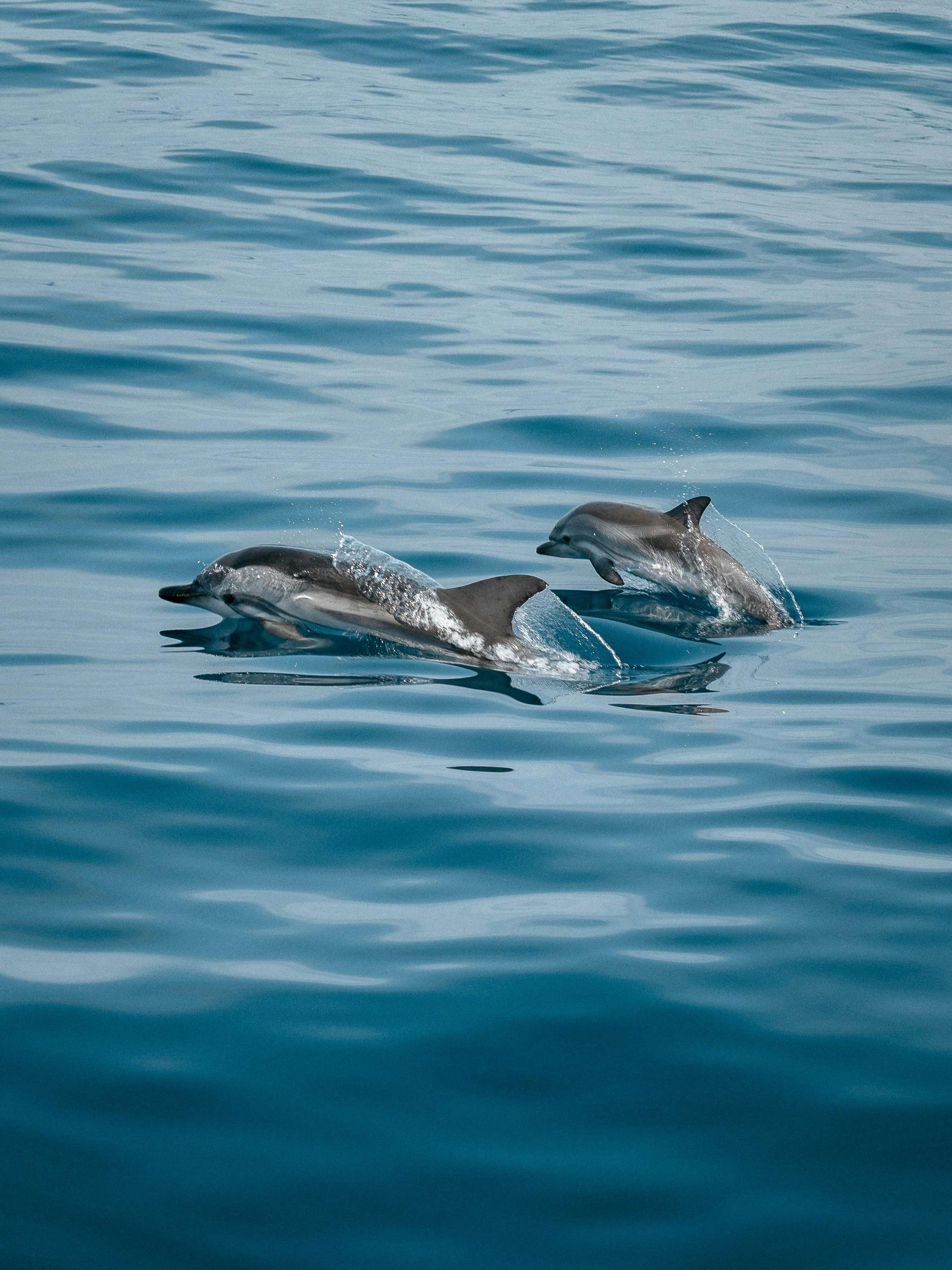
The pods have a schedule, and it explains the whole morning. Spinner and bottlenose dolphins hunt offshore in deep water all night, then return between 6:30 am and 8:30 am to the sheltered bays of Tamarin and Black River to rest, socialize and nurse their young away from the open-ocean swell.
The bays face away from the southeast trade winds, which is what makes them safe resting water.
By mid-morning they move back out toward deeper ocean, exactly as boat traffic peaks. A 6 am launch puts you on the water while the dolphins rest near shore and before the crowd arrives. One operator runs departures from 7 am in the winter months and reports many boats gathering after 8:30 am.
Some beliefs about the bays deserve retiring before you choose an hour.
What people get wrong about the bays
MythThe dolphins play along the coast all day
Reality
They enter the shallow bays at dawn to rest and recover from night feeding, and by mid to late morning they head back offshore
MythAn afternoon swim is just as good
Reality
By the time the bay is busy, the pods have usually moved offshore, so afternoon is the poorest option
MythA boat that chases shows more dolphins
Reality
Chasing is what the regulations prohibit, and a skipper who waits quietly tends to get the more natural encounter
The ethics follow from the biology. Crowding animals that came in to rest and nurse is the disturbance travelers regret; meeting them at first light is how you stay out of that picture.
Tour for this
Black River Swim with Dolphins Speedboat Tour4.5★ (465) · 2.5 hours · Free cancellation
Which ethical dolphin tour fits you, speedboat, kayak or catamaran
Three mornings, three kinds of encounter. The private speedboat swim gets you closest: a small boat, a flexible pace and the chance to slip into the water as the pod passes.
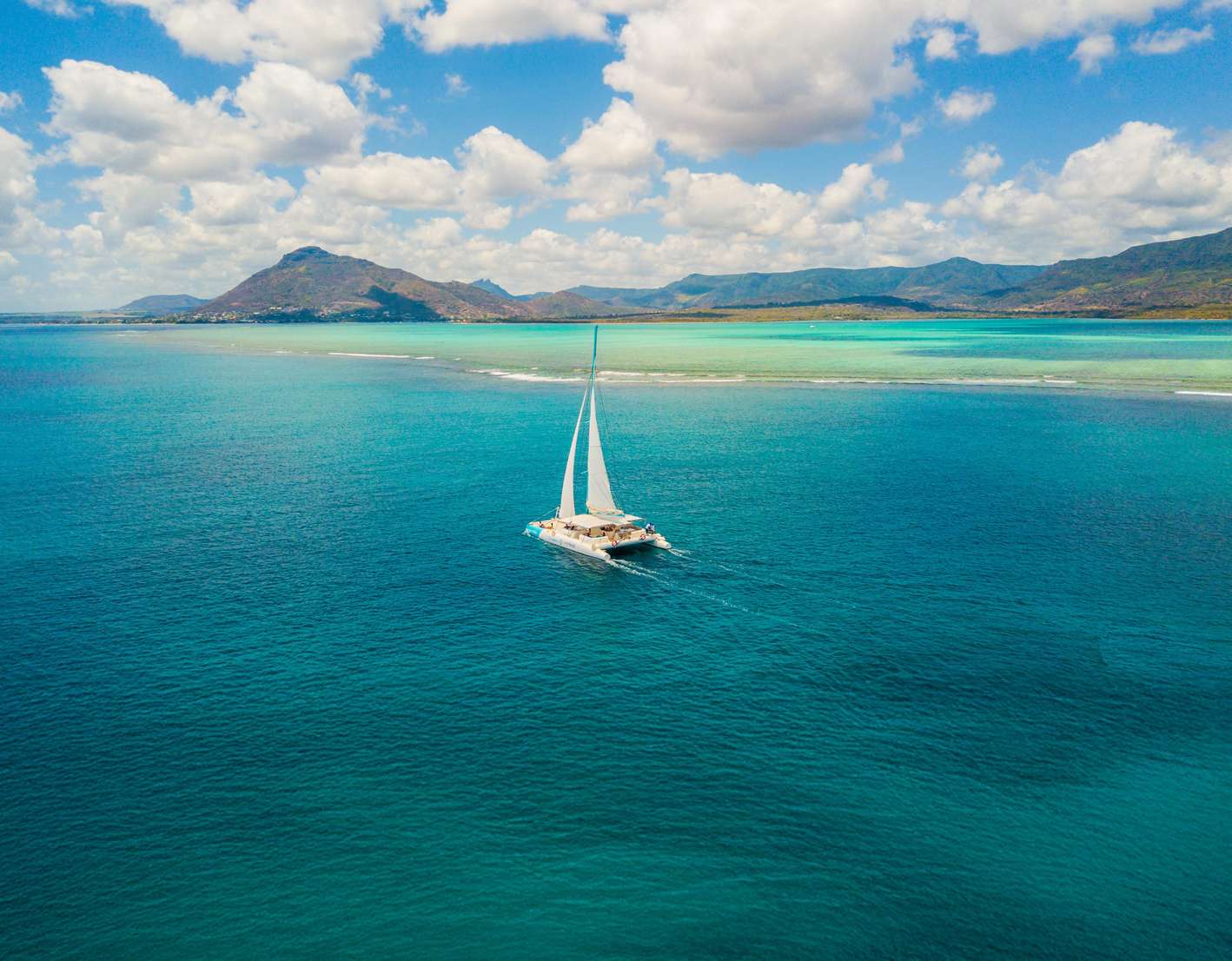
The guided kayak is the lightest footprint, moving on paddle power alone. The catamaran cruise is a watch-from-the-deck full day, with snorkeling stops, an island and lunch, and no guarantee you swim with dolphins at all.
Set the three side by side and the right one usually picks itself.
Three ethical mornings side by side
Private speedboat swim
Guided kayak
Catamaran cruise
The encounter
Swim as the pod passes, from a boat that keeps 50 metres
Watch from a silent paddle, dolphins may come near
Watch from the deck, with swimming and snorkeling stops
Noise impact
Engine, but no-wake near the pod
None, no motor at all
Engine, steady cruise
Group size
Up to 4 passengers plus crew
Small guided group
Larger day-boat group
Duration
About 2 hours
2 to 2.5 hours
Most of the day
Suits
Confident swimmers who want the water
Paddlers who want the quietest option
Families and mixed groups who want a full day
Private speedboat swim
The encounter
Swim as the pod passes, from a boat that keeps 50 metres
Noise impact
Engine, but no-wake near the pod
Group size
Up to 4 passengers plus crew
Duration
About 2 hours
Suits
Confident swimmers who want the water
Guided kayak
The encounter
Watch from a silent paddle, dolphins may come near
Noise impact
None, no motor at all
Group size
Small guided group
Duration
2 to 2.5 hours
Suits
Paddlers who want the quietest option
Catamaran cruise
The encounter
Watch from the deck, with swimming and snorkeling stops
Noise impact
Engine, steady cruise
Group size
Larger day-boat group
Duration
Most of the day
Suits
Families and mixed groups who want a full day
Whichever you pick, the checks stay the same: a skipper holding a Tourism Authority marine-mammal certificate, an operator who follows the watching guidelines, and reviews that describe a captain keeping distance. A day that respects the pod books out early.
A morning that pairs well with this chapter: the Flic en Flac: Private Sunrise Dolphin Watching Boat Tour, a 2-hour private trip for up to four, leaving around 6:30 am, keeping the 50-metre distance and finishing with a reef snorkel.
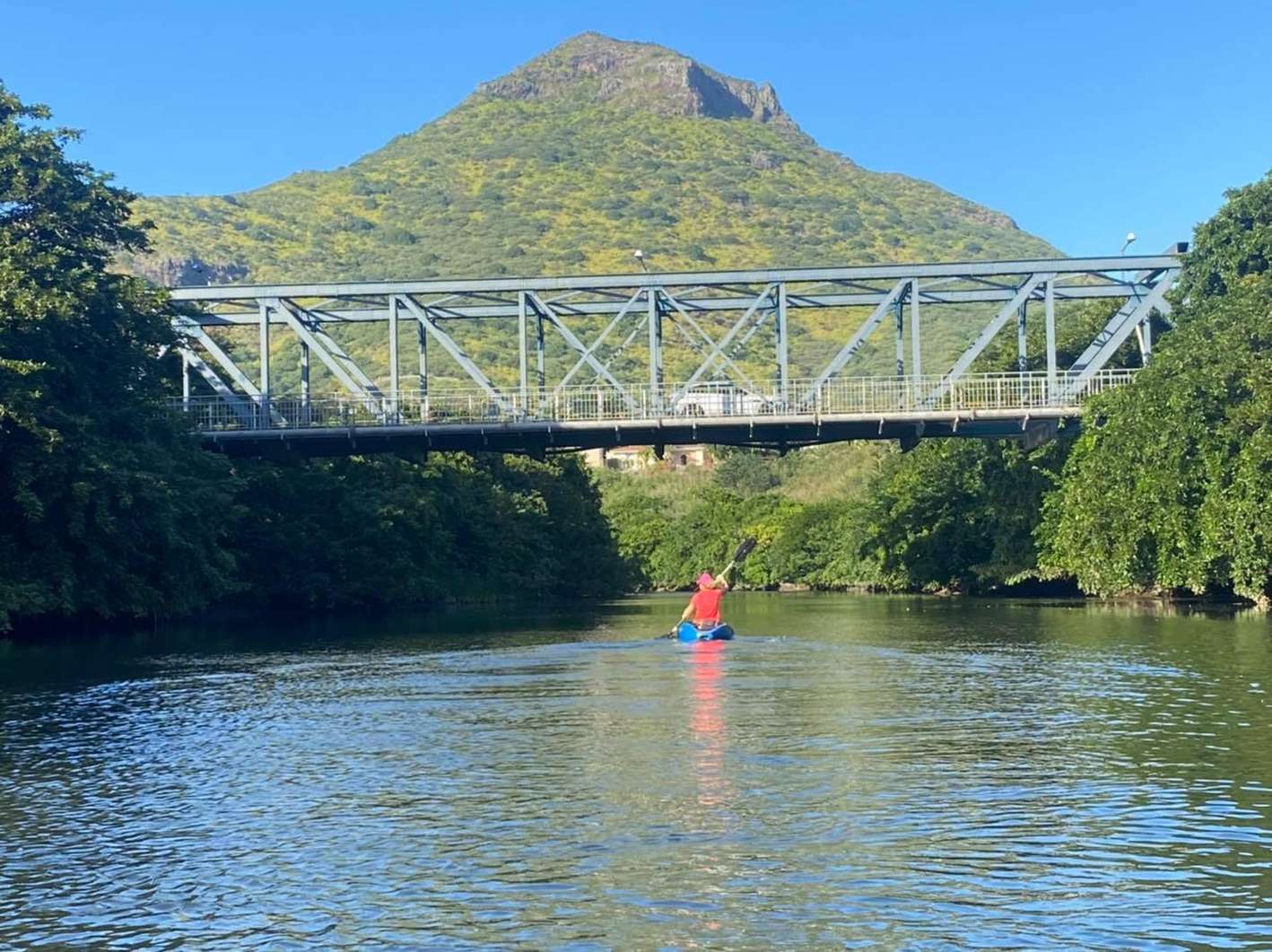
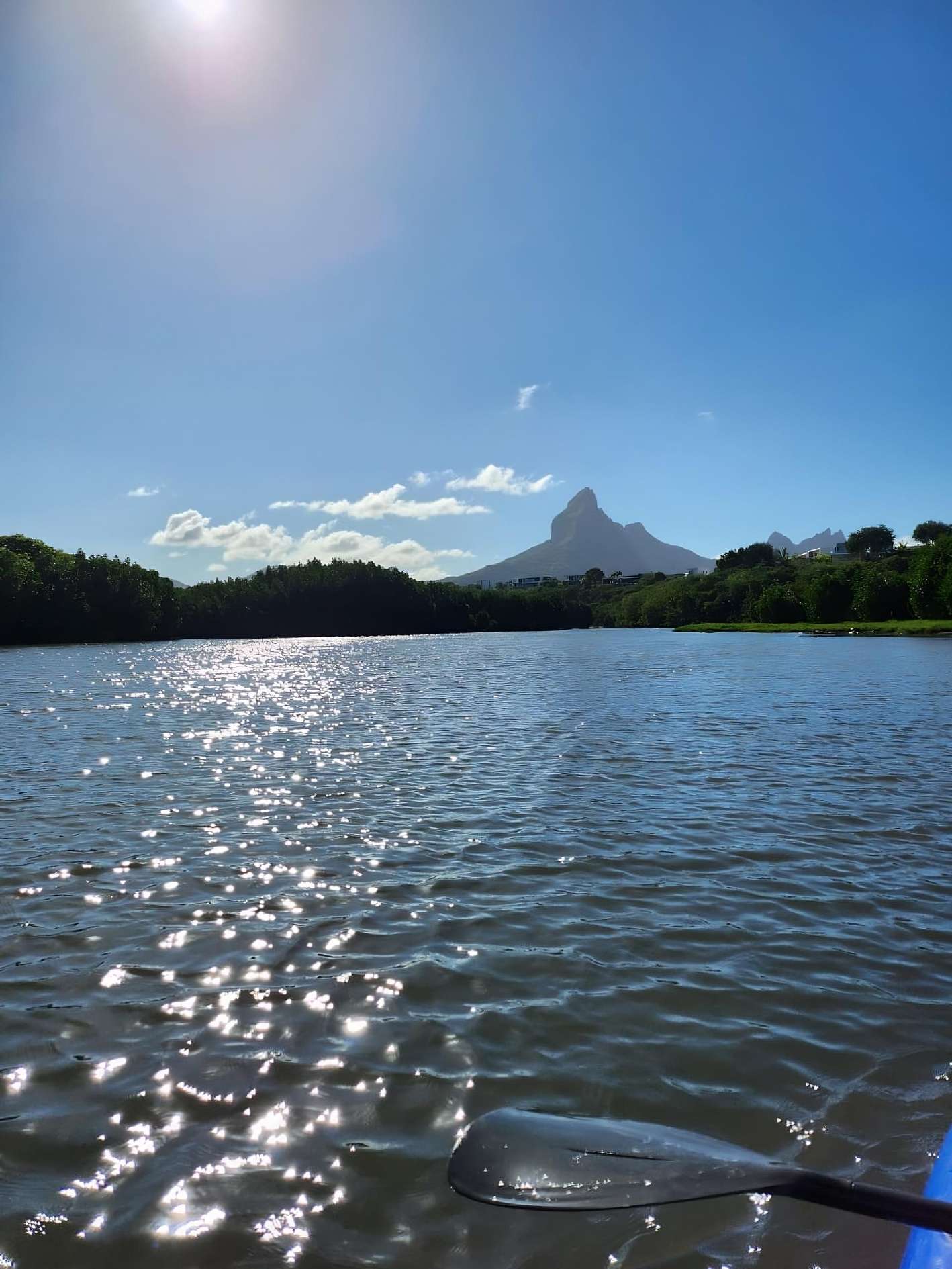
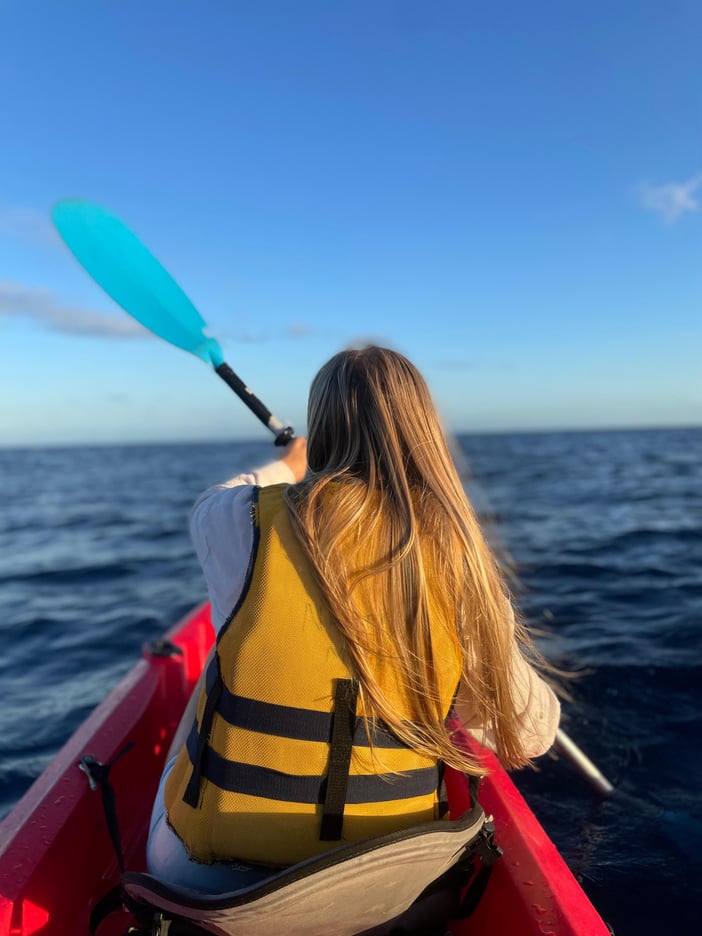
No engine means no engine noise, and that changes the approach completely. A paddle into Tamarin Bay at sunrise adds none of the underwater racket a motorized hull does, and the dolphins may choose to come toward the kayaks, especially early. You hear the bay instead of the fleet.
Silence still has limits. Kayaks that creep too close startle dolphins just as effectively as engines do, and the 50-metre rule applies to pleasure craft regardless of propulsion. The guide holds the distance and lets the pod decide.
There is another reason the kayak matters. Travelers report that motorboats can crowd the pods and push them offshore, and on those mornings the bay can feel like a boat show with dolphins somewhere in the middle. Fewer engines at dawn is a direct contribution to a calmer bay.
The Tamarin: Guided Kayak Tour with Dolphins runs 2.5 hours at sunrise and supplies kayak and life vest.
Its operator counts dolphins on about three quarters of its mornings; that is the company's own record, and no tour guarantees a sighting. If the bay is empty, the guide takes an alternative route along the Tamarin River.
Wear aqua shoes or sandals for the launch over coarse sand and river stones, and expect the tour to move with tides and weather.
Tour for this
Tamarin: Guided Kayak Tour with Dolphins4.6★ (247) · 2.5 hours · Free cancellation
Stay in the north or east and the alarm goes off in the small hours. For a 6 am boarding, leave Grand Baie by about 4:55 am, and by about 5:25 am for a 6:30 am launch.
Those are no-traffic estimates, so add time if you must check in before boarding. The main east-coast resort areas sit at much the same distance, just over an hour.
The two drive times side by side, so you can set an alarm that has margin built in.
Drive times to Tamarin Bay before an early dolphin tour
The west-coast meeting points are simple to find once you know them. Tamarin Public Beach, near the Fish Landing Station, serves the kayak and many boats.
La Preneuse and Grande Riviere Noire host the speedboats; one meets on La Jetée Road there, another tells guests to park after the entrance, cross a small bridge and gather at the roundabout.
At Le Morne, the public beaches have large free car parks, and boats usually leave from the northern end or the small channels on the lagoon side, with skippers met directly on the sand.
Build in a buffer anyway. A missed boat at dawn is a missed morning, and the drive is the one part you control completely.
The morning runs cold, wet and bright in turns, so pack for all three. Wear your swimsuit under your clothes for the early start, and keep a light windbreaker or sweatshirt at hand for the breezy ride out.
Sunscreen, a hat, water and a towel cover the rest of the basics; a second towel and an extra waterproof layer earn their space if you get soaked.
First-timers lose the most time on a handful of small things, so hear them before you pack.
What nobody tells you
The communal boat mask may not fit you
A mask fitted to your own face is far less likely to leak, and the encounters are brief, so a leaky mask can cost you the whole sighting
Spray gets into everything
A 10 to 20 litre roll-top dry bag keeps your towel and dry clothes dry, and a waterproof pouch on a lanyard protects your phone
No hotel buffet opens for a 5 am start
Pack a portable breakfast or snack, because what is provided on the boat varies from a full breakfast to water and cake
Bare feet struggle on wet decks
Closed-toe water sandals with siped soles grip slick fiberglass and protect your feet on boarding ladders and coral sand
The sea stays around 24 degrees even in winter, so a thin shorty wetsuit is only worth it if you chill easily or plan a long swim. Most operators supply snorkeling gear and life jackets, so your own mask is the one item that genuinely pays for itself.
Honest self-assessment first. You need to swim 50 metres without panic in choppy water wearing mask and fins, enter deep water from a moving boat, and briefly free-dive 2 to 3 metres on a held breath.
Currents outside the reef can run well over half a metre a second, and water pours hard out through the pass on a falling tide. Getting in and out of the boat repeatedly takes stamina and agility.
Plan your exit before you enter. One operator may refuse water entry to anyone who looks insecure with a mask and fins, and the law backs a cautious crew.
Pregnant women are ruled out on several tours, one lists people with heart problems, and one kayak tour bars non-swimmers. Age rules vary by boat: some take children from 4, one private tour welcomes children 3 and under, and babies under 1 are excluded on some Flic en Flac departures.
If open water is beyond you, a watch-only trip still gives you a full morning at sea, with plenty to see from the deck, and it suits anyone prone to seasickness or simply unsure.
Two hard rules close the chapter: never jump in at the back of the boat without the skipper's clearance, because of the propeller running there, and wear the flotation device you are given. Outside the lagoon, everyone on board wears one, children included.
Tour for this
Île aux Bénitiers: Catamaran Tour with Dolphin Watch & Lunch4.2★ (416) · 6 hours · Hotel pickup · Free cancellation
Seasickness and the safety rules behind an ethical swim
The swell outside the reef is the part of the day people underestimate. Seasickness susceptibility varies, but travelers who have felt it recommend taking precautions before launch, and one tour advises bringing motion-sickness prevention outright.
If you reach for medicine, ask a pharmacist beforehand and take it before symptoms build; preventive doses work better than rescue doses.
The habits that help are simple. Sit near the centre of the boat, stay on deck for fresh air, and keep your eyes on the horizon and off screens. Eat lightly and avoid alcohol the night before.
The sea is typically calmest between 6 am and 9 am, before late-morning winds build, which is one more reason the dawn slot wins. Catamarans roll less than speedboats, though small boats can still sway while waiting.
On safety, the law already works in your favor. A licensed dolphin swim requires a life-saver on board wearing an approved flotation device, plus a first-aid kit, an oxygen kit and liability insurance. That is the machinery behind a trip that looks effortless.
A dolphin circles you. Curiosity explains it: the animal may be investigating something unusual in its water. Stay calm, move back slowly to at least the minimum distance, and let it approach or leave on its own terms.
The law draws the lines clearly. Touching a dolphin is prohibited, as is feeding one or throwing anything near it, and feeding changes their diet and can make them dependent on people. Motorized sea scooters are banned near dolphins to cut acoustic disturbance.
Free-diving directly above a pod is out too, since diving within 500 metres of the closest dolphin is prohibited. No drones either: recreational flying over the sea is restricted, and filming marine mammals from one counts as harassment.
You also hold the line on your own boat. If the crew chases a pod, crowds it or plays loud music near the animals, ask them to slow down, give the dolphins space and keep the engine quiet near them.
If too many boats gather around a pod, the ethical move is to leave. Move away if the dolphins look agitated. The encounter ends the moment the animals decide it does.
When the ethical trip turns - weather and empty seas
Rough mornings happen, and the fallbacks are worth knowing before you book. Mauritius issues a heavy-swell warning when waves of 4 metres or more are likely, and rough seas hamper visibility enough to cancel dolphin trips.
Cyclones and weather safety bans can shut boat departures from November to mid-May, with the highest risk between January and March.
Each tour sets its own terms for a disrupted day, so read them before you commit.
What happens when the day does not go to plan
If this happens
What happens then
You cancel ahead of time
Every tour on this page lets you cancel up to 24 hours in advance for a full refund
Sea or weather turns unsafe
Operators may change the itinerary or offer a new date or a refund; policies vary, so ask at booking
No dolphins appear on the kayak
The guide takes an alternative route along the Tamarin River, with the operator's own sighting rate at about three quarters of mornings
No marine mammals on one cruise
Eligible passengers on the Dolphin Eco Cruise receive a complimentary voucher to go again
The pod already has boats around it
A responsible crew leaves the animals alone rather than joining the crowd
The sights near Black River and Le Morne make a good plan B for a washed-out morning, and the nearest ones sit within half an hour's drive.
Two booking habits tip the odds your way. Schedule the trip early in your holiday, so a washed-out morning can be moved to a later day, and plan more than one boat outing if dolphins matter to you. Veterans do not bet the whole week on a single dawn.
A wild dolphin encounter in Mauritius is legal, regulated and, done right, does the animals no harm. The recipe is short: an operator that respects the 50-metre buffer, a launch near 6 am, and swimmers who let the pod decide.
If you want the gentlest version, the guided kayak is the pick; if you want the water, book the private sunrise swim.
Go ifYou are a confident open-water swimmer who wants the encounter on the dolphins' termsYou can make a 6 am launch and will book early in your holidayYou like the idea of a silent kayak over a fleet of engines
Skip ifYou are pregnant, have a heart condition, or cannot swim 50 metres in choppy waterYou want a guaranteed close interaction rather than a passing podYou are prone to seasickness and would struggle on open swell
Our pick to book
Tamarin: Guided Kayak Tour with Dolphins4.6★ (247) · 2.5 hours · Free cancellation
skippers must show a tourism authority certificate on request
The questions cautious travelers ask before booking, answered plainly.
Tamarin2026
Saw a pod glide past at arm's length and never touched one. Ask your skipper to show the marine-mammal certificate before you book.
Are you allowed to swim with dolphins in Mauritius?
Yes. Swimming with wild dolphins is legal here as a separately licensed activity. Paid operators must hold a licence for dolphin and whale watching together with swimming, meet safety requirements, and follow set rules in the water.
Is swimming with dolphins in Mauritius ethical?
It depends on how the boat behaves. The dolphins are wild and free to move on, and swimming with them does no inherent harm. Problems arise when boats crowd or chase pods and swimmers enter repeatedly. Pick an operator that keeps its distance and lets the dolphins decide whether to approach.
Is it illegal to swim with dolphins in Mauritius?
No, it is legal through a licensed operator. What is prohibited: touching or feeding dolphins, making noise to attract them, approaching head-on or from behind, and circling them. Swimming with whales, by contrast, is banned outright.
How close can boats legally get to dolphins?
Boats must stay at least 50 metres from the closest dolphin. Between 50 and 150 metres they must travel at no-wake speed, approach from the side, and run parallel to the pod. The law sets no fixed buffer for swimmers in the water.
How do I tell an ethical operator from a boat that chases dolphins?
Responsible skippers cut the engine and wait quietly away from the pack, approach from the side, and drop swimmers ahead of the pod's path so the animals swim toward them.
Ask whether the operator follows local watching guidelines and how it limits time with a pod. Check reviews for how the captain behaved near the animals.
Is it safe to swim with dolphins in Mauritius?
Licensed trips must carry a life-saver, a first-aid kit and an oxygen kit, and each swimmer signs a disclaimer and gets a briefing before entering. The animals themselves are powerful and move unpredictably, so keep a respectful distance and never touch one. If you are not confident in open water, choose a watch-only trip.
Are dolphins dangerous to swim with?
Wild dolphins are not aggressive toward swimmers, but they are strong animals moving on their own terms underwater. The rules work in your favor here: no touching, no chasing, and no more than three people in the water at once, including a life-saver.
Do dolphins like swimming with humans?
Sometimes they come close, sometimes they swim past or move away. In Tamarin Bay, encounters are usually brief swims as a pod passes, and the dolphins typically stay a few metres off rather than coming within reach. That choice to approach or leave is what keeps the encounter ethical.
What briefing do I get before entering the water?
Regulations require operators to brief every swimmer on calm, silent swimming techniques before entering the sea, and to carry written information on board about the rules near dolphins. In practice, guides also time your entry and coach you in quietly, one at a time, without splashing.
Why is kayaking with dolphins considered a low-impact option?
A sea kayak has no engine, so paddling toward resting pods adds little of the underwater noise motorboats produce. Tamarin and Black River bays are dolphin resting areas, so the quiet approach matters there. Keep your distance even by kayak, since paddling in too close can still startle a pod.
Why is a captive dolphin swim worse than a wild one?
Captive dolphins live in small enclosures that cannot meet their natural social and behavioural needs, and they cannot escape contact they do not want. In the wild off Mauritius, the dolphins move freely, and responsible observation lets them behave naturally while keeping disturbance low.
What should I do if the boat crowds or chases a pod?
Ask the crew to slow down and give the dolphins space, and to keep noise down near the animals. If too many boats have gathered around a pod, the best move is to leave them alone. Move away whenever the dolphins change behaviour and look agitated.







 Your best match